




By Jonathan Magee
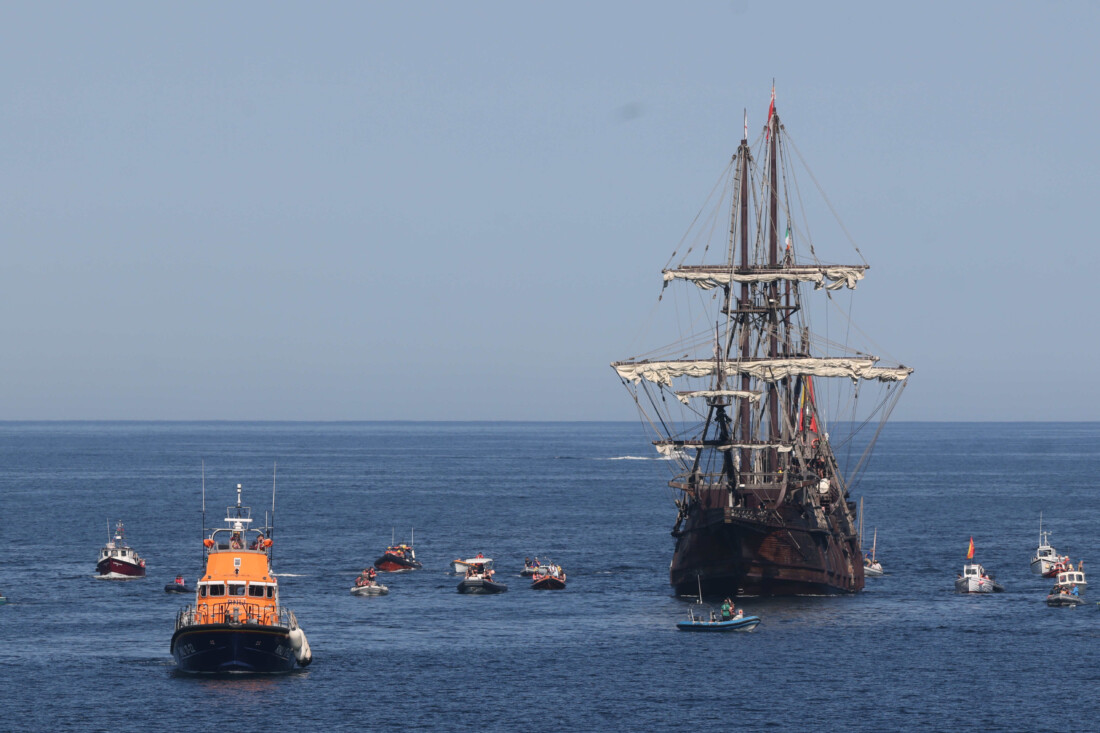
THE world’s largest replica Spanish galleon, El Galeón Andalucía, sailed into Mullaghderg Bay on Tuesday, marking two significant anniversaries on the Donegal coast.
John Gallagher, known locally as John Paddy Óg, from Mullaghduff, organised the visit, and said the scale of the occasion struck him as the ship came into view. “That’s the biggest ship we’ve had in Mullaghderg, we love to see it today,” he said.
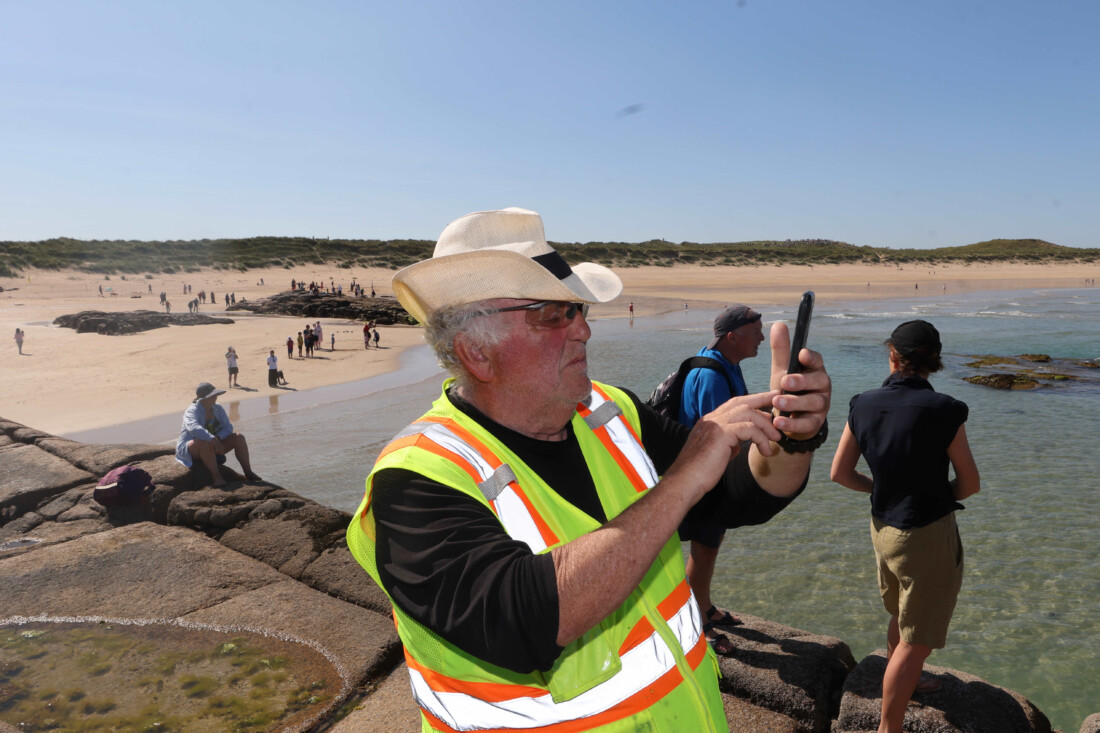
John Paddy Óg Gallagher, busy at mission control, Mullaghderg bay, July 14, 2026. Photo Brian McDaid.
He added the event meant a great deal to people across the Rosses. “This thing here today means everything to them. They’ve been talking about it now for the past two weeks. They’re coming from far afield,” he said, gesturing at the crowds lining the banks above the strand. “Just take a look around.”
Even the conditions cooperated. “You couldn’t have planned it,” he said of the weather.
The bay’s connection to the Spanish Armada dates to 1588, when one of the fleet’s galleons, sent around the Scottish coast and down the Irish coast in bad weather after the failed invasion of England, ran up on the rocks here. The spot is still known locally as the Spanish Rock he said.
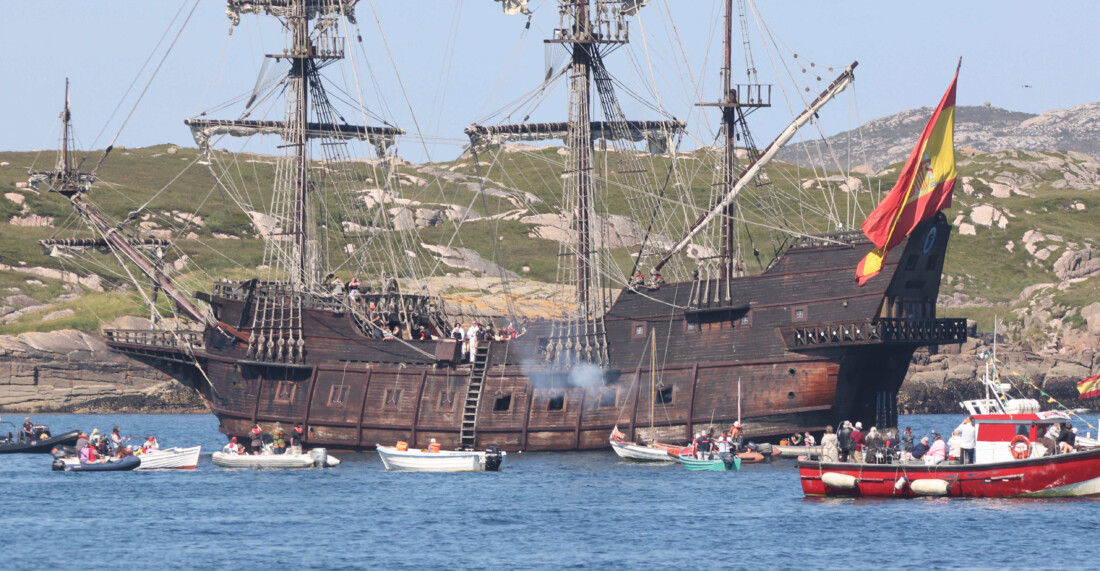
El Galeón Andalucía, Mullaghderg bay. Photo Brian McDaid.
Yet John Paddy Óg pointed out that, until Tuesday, nothing marked that loss. “There was no memorial to any of the guys, or the ship that was lost here,” he said. A memorial stone at the head of the strand instead remembers a more recent tragedy: four Gaeltacht students who drowned at the beach on July 13, 1972.
The visit had originally been planned for Monday, the exact anniversary of their deaths, before being pushed back a day. Cannons were fired from the galleon and flares released in memory of the sailors in 1588 and the four girls lost in 1972, while wreaths were also laid.
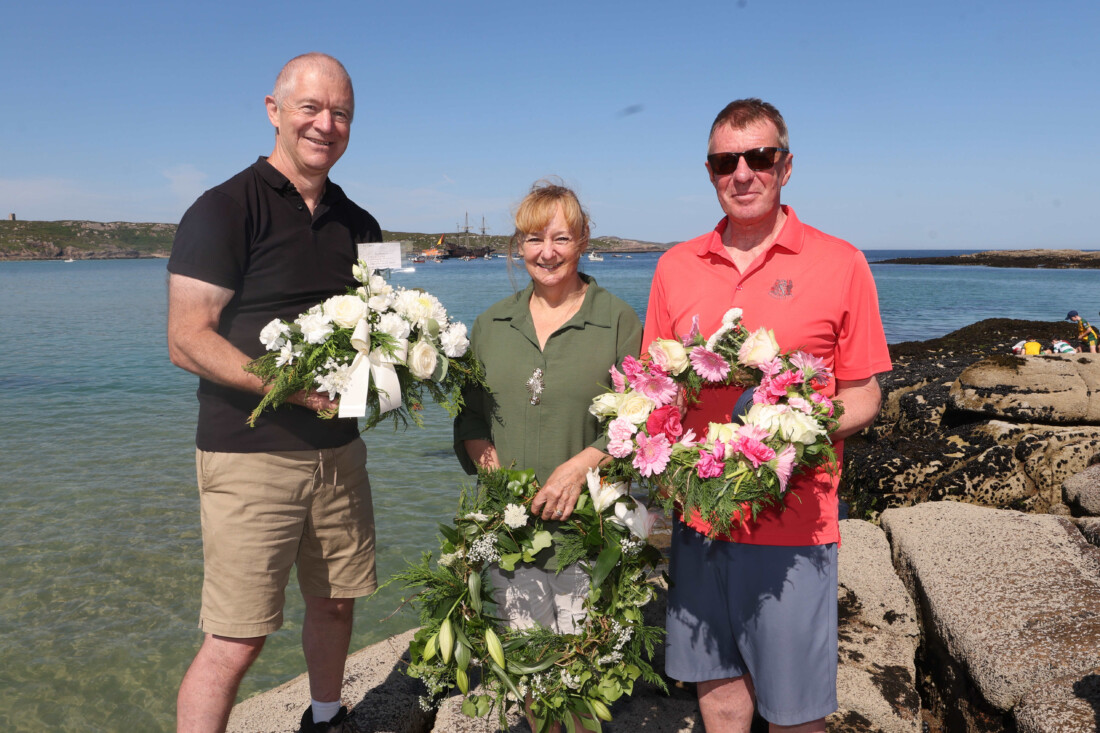
Relatives of the four girls who tragically drowned on July 13, 1972. The four young Irish girls were: Máire Grae, Catherine Carroll, Susan O’Reilly, and Bernadette McCabe. Photo Brian McDaid.
The idea for it all began with Gallagher’s daily walk. “I go for a walk here every day,” he said. “I took a photograph of this bay, and I was tracking this boat all the way around the Irish coast. She was in Derry, she was in Sligo. She went the whole way round.”
On June 24 he sent that photograph to his friend John Joe McBride, and the pair began working the phones. He credited McBride and the local committee with making it happen. “They helped out enormously. You can’t do it on your own,” he said.
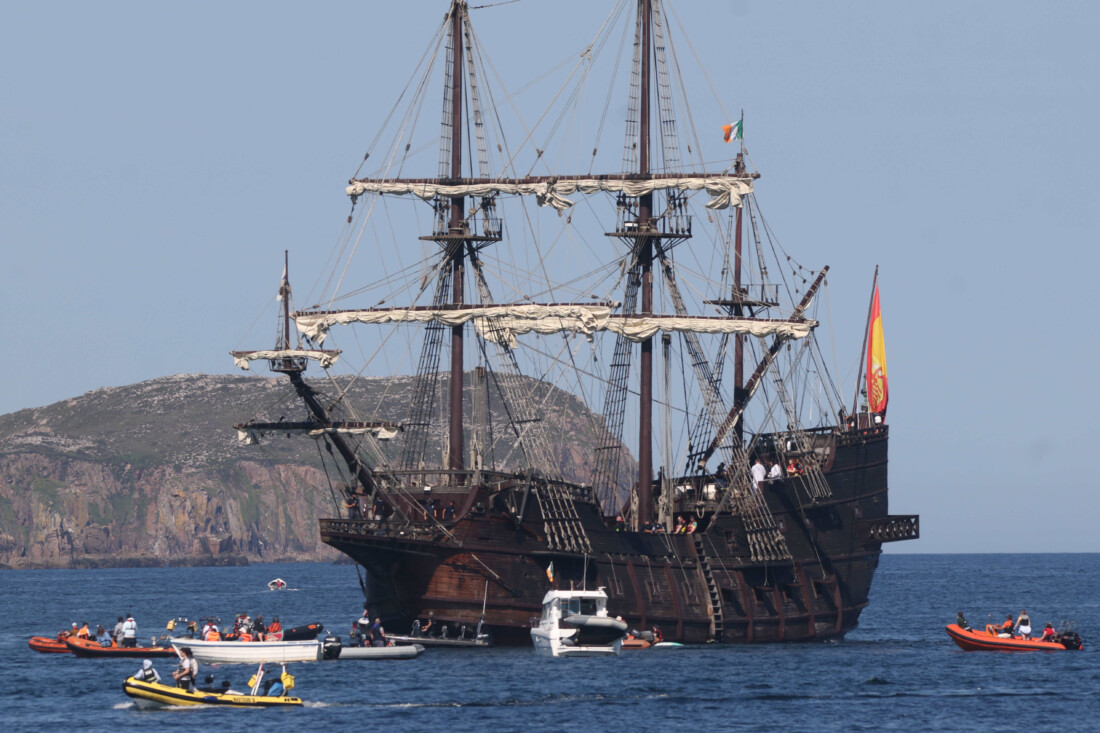
Photo Brian McDaid.
John Joe was aboard the galleon on Tuesday as it entered the bay, in the company of two priests, Fr. Nigel Ó Gallchóir and Fr. Brian Ó Fearraigh from Gweedore, who blessed the vessel, while a welcome was read from a scroll by Pat ‘the Cope’ Gallagher thanking the crew and welcoming them to Mullaghderg.
Deputy Gallagher said: “This morning’s event was a remarkable and deeply moving tribute. The turnout from the local community was extraordinary, and the presence of the RNLI, Coast Guard, and 52 local vessels added great dignity to the commemoration.
“I want to thank everyone who took part and everyone who came out to witness this historic moment. I would like to pay tribute to the organising committee lead by John Joe McBride, John Paddy Óg Gallagher and Kevin Sharkey and all who assisted today.”
Fr. Pat Ward blessed crosses on the shore in memory of the lost soldiers and all who have perished in the waters along our coast.
John Paddy Óg is also a keeper of the local lore that has grown around the original wreck. By tradition, horses came ashore from the stricken vessel, Arabian stallions among them, with some said to have gone to Arranmore and others to Cruit.
He recounted too that Donegal was the most receptive place in Ireland for Armada survivors, even with the English offering a bounty for them. “Donegal was the most receptive place in Ireland,” he said. “It was controlled by the clans, and they got them to join up with them, because they were experienced soldiers. They had a lot better guns and cannons. A big bonus for them.”
The folklore speaks to how deeply the Armada runs in local memory along this coast.
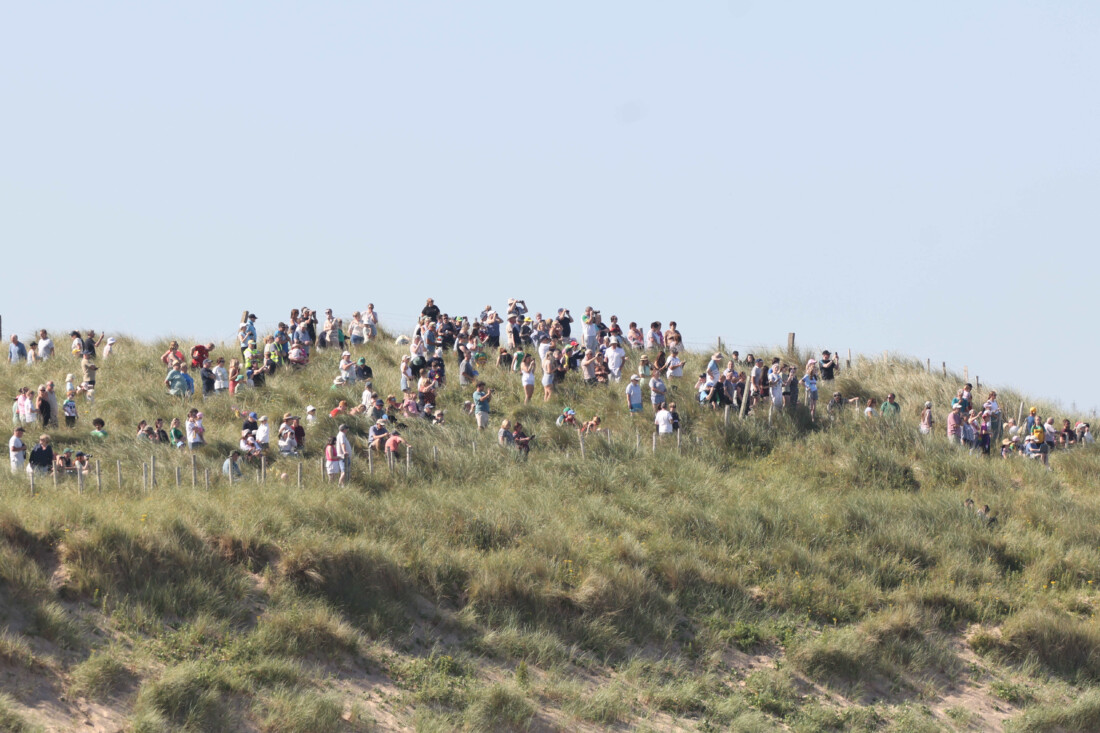
Crowds line the shore for the arrival of El Galeón Andalucía. Photo Brian McDaid.
Few know the bay better than John Paddy Óg himself. “I swam here all my life when I was young,” he said. He spent 43 years working around the world as a gas turbine engineer. These days his travels rarely extend beyond the daily walk along the strand, the same walk that sparked Tuesday’s visit.
He watched the galleon’s approach with an engineer’s eye as much as an organiser’s pride. “She’s fantastic looking when you see her. With a draft of only three and a half metres, the ship came well inside the ten-metre mark,” he said – close enough to give the crowds a spectacular view as her crew prepared the cannon on the port side.
On the radio, the galleon’s crew could be heard coordinating the salute with the shore. Flares were launched from both sides after the cannons fired, the sound rolling around the bay.
For John Paddy Óg, the turnout said everything. People had come from far beyond the Rosses, he said, and the talk locally had been of little else for a fortnight. Asked what it meant to the people of the area, he did not hesitate: “It means a hell of a lot.” El Galeón Andalucía, touring as a floating museum of Spanish maritime history, left the bay around midday to continue north, heading towards Coleraine and then on to the west coast of Scotland near Oban.