

The Third Degree, with Paul Bradley.
Hi Ann, thank you for doing this interview. Could you tell us a little about yourself, please?
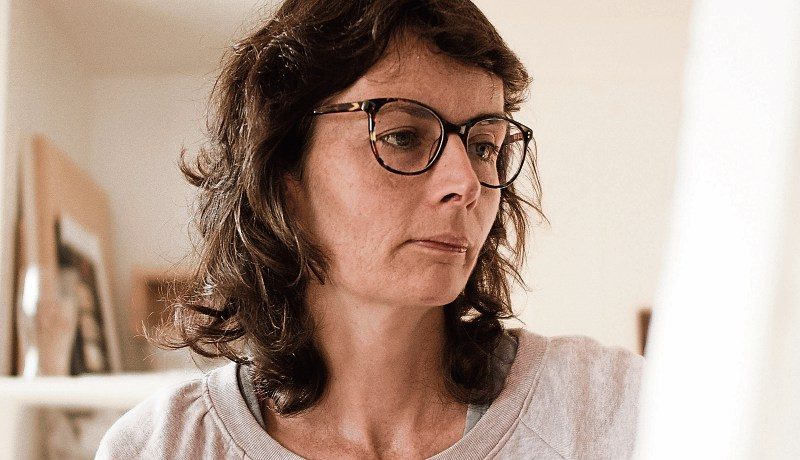
I grew up on a dairy farm between Raphoe and St. Johnston. When I was 19 I moved to Dublin to do a Degree in Fine Art at the National College of Art and Design. I spent 20 years living in Dublin and rented various artist studio spaces around the city.
In 2014 I bought my home in Donegal. I never intended to leave Dublin but when I saw the house I knew it was for me. It was a shell of a house so after a few years of slowly finishing it, I’ve been living here now since the end of 2016. It’s close to my family’s farm where I grew up – I can hear the dogs barking and the roosters crowing from my studio yet the farm is also out of sight.
You’ve spent time in Wyoming as well as Donegal – is there much comparison in people or in landscape?
I spent a month at the Ucross Foundation in north east Wyoming in November – December 2023. It’s an artist residency programme situated on a 20,000 acres working cattle ranch at the foothills of the Bighorn Mountains. The area where I was based in Wyoming contained huge ranches.
East Donegal is like a smaller scale version of Wyoming as I’m surrounded by farms here. Both places are agricultural. Country music is popular in both places. The people living in both places are used to rural life and are connected to the land.
When I came back to East Donegal, it took me a little while to adjust to how small the sky is here. I always thought the sky was huge here but it’s about a quarter or less of the sky over there and the fields here are a fraction of the size of the fields over there. The cows are so far away in the fields over there.
I had an American friend visiting me here in Donegal a few years ago and she was struck by how she could hear the cows breathing behind the hedges over here. I understood what she meant when I went to Wyoming.
These two realms are very different, my online presence shows my work but does not feed back into it.
This is the way my work has naturally evolved. I liked empty spaces, then I liked putting people in it.
The theme and content of my paintings are changing all the time. People and animals might disappear from my work and it might focus on minimal landscapes again.
My paintings dictate to me what direction to go. The human or animal presences in my work have enabled me to channel a feeling into the paintings and I might have used a tree for this purpose in the past. I also like to place a figure in the landscape to show how large the sky and land is around the figure.
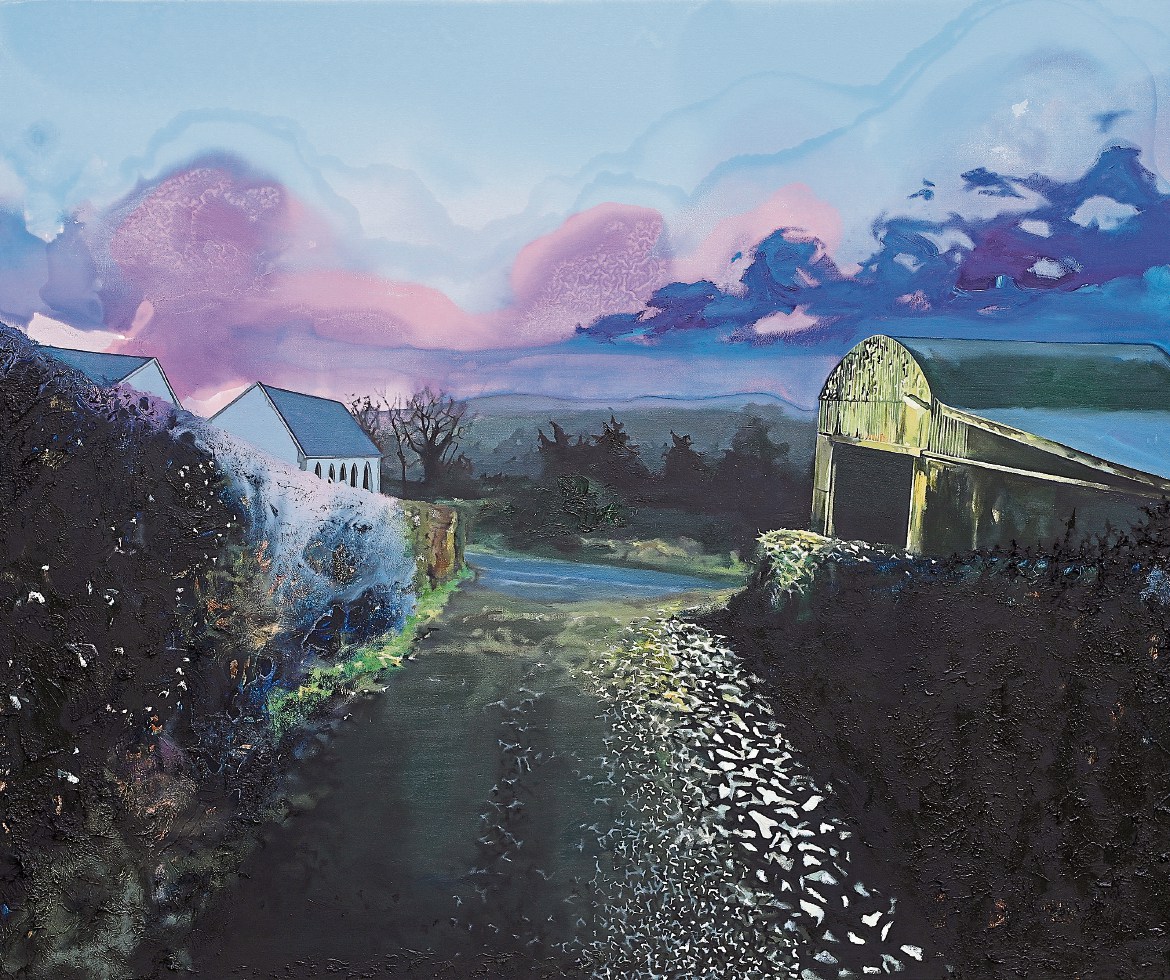
Passing Galbraith’s Farm in late December.
If wilderness, and the animals that live in it, was the theme of your recent exhibition, is it fair to say your titles (like ‘Will you make it through the winter?’ and ‘The Fragility of Being Here’) show a concern about the loss of both (and what a world without them would look like)?
My work touched on themes concerning the loss of wilderness and the animals that live in it for my last exhibition ‘The Last Wolf’ probably because I was triggered from being in that part of Wyoming. It felt like I was in the last of the great wilderness during my walks up into the hills during my time there.
Each of my exhibitions have a different theme running through them. I’ve moved on from this theme now.
Those titles reflect feelings about the fragility of life in general – whether it be human or animal. The painting ‘Will you make it through the winter’ was literally a question to myself about a sickly fox I kept encountering during my time in Wyoming in those early winter snowfalls before I returned to Ireland.
In recent years I’ve become more aware of how winter is a very challenging time for both people and animals.
Being in Wyoming also triggered my fascination with wolves since they were reintroduced to Yellowstone in the 1990s. I spent a long time researching them when I returned to Ireland.
I used the three wolves in Wild Ireland, the wildlife sanctuary here in Donegal, as source material for some of the paintings in this recent exhibition.
The response was very positive. The main thing about an exhibition is that many people can see it and you don’t always know how they respond to it. Taylor Galleries in Dublin is a beautiful space. Pat, John, Lawrence and Jessica Taylor run the gallery and are hugely supportive to their gallery artists.
Do you have any future projects on the way already? Is a project a very planned thing, or does an idea just hit you suddenly?
I’m working on a large painting at the moment, which will be exhibited at the annual exhibition at the Royal Hibernian Academy in Dublin from the end of May until early August. Many times an idea just hits me suddenly but I have to invest time in planning the work.
When you’re not working on art, how do you like to fill your free time?
I love getting outside into nature, I am always reading a book and I regularly bake bread. This is what I love doing when I’m not painting.
I grew up in the atmosphere of my mother baking bread. When I was a small child she would give me a small bit of dough to pretend to bake alongside her. Now I bake all my own bread just as she did.
It is essential for me to get outside into the landscape every day regardless of the weather, both for my mental health and because nature is my greatest source of inspiration.
To find out more about Ann Quinn’s paintings check out her artist website: www.annquinn.org and Taylor Galleries website: www.taylorgalleries.ie