




After decades of contributions, retirement brings one unavoidable question: what should actually happen to all that money now sitting in a pension fund? The answer is not as automatic as it might seem. Each of the available routes comes with it’s own trade-offs around tax, flexibility and how long the income needs to last.
Most retirees end up choosing between 2 core options for the bulk of their fund: an Approved Retirement Fund (ARF) or an Annuity. An ARF keeps the money invested after retirement, allowing the individual to draw down income as needed while retaining control over how the fund is managed, with anything left over passing to beneficiaries on death. The downside is that the fund stays exposed to market movements and Revenue requires a minimum level of withdrawal each year once certain ages are reached. An Annuity takes the opposite approach, exchanging the pension pot for a guaranteed income for life or a fixed period. There is no risk of running out of money but also no further upside or flexibility once it is set up.
Before either of those decisions is made, most people first consider the tax-free lump sum. Current Revenue rules allow up to 25% of a pension pot to be withdrawn tax-free, capped at €200,000 across a person’s lifetime, a limit that remains unchanged for 2026 and applies regardless of how many separate pension schemes someone holds. It is tempting to take the full amount immediately, whether to clear a mortgage, cover a big-ticket expense or simply have cash on hand. But drawing it all down is not always the optimal move. Funds left untouched continue to grow and in some situations, phasing withdrawals over time can reduce the total tax paid. Certain schemes also permit taxable lump sums or partial withdrawals instead. These need careful handling, since tax erodes their value quickly past the €200,000 threshold: the next €300,000 is taxed at the standard 20% rate with anything beyond that taxed at the individual’s marginal rate.
There’s no single right answer. Health, lifestyle goals, other income and how much a person wants to leave behind all shape which path makes sense and 2 people with identical pension pots can end up making very different choices.
Retirement planning does not stop the day someone finishes work. The way a pension is drawn down in the early years can influence financial security for decades to come and small structuring decisions often carry an outsized long-term impact.
Given the stakes, professional advice is less a luxury than a necessity. A financial advisor can balance today’s needs against tomorrow’s goals, keep the tax treatment as efficient as possible and make sure the overall retirement income strategy holds up. Retirement, after all, should be about enjoying what’s been built, not second-guessing whether it will last.
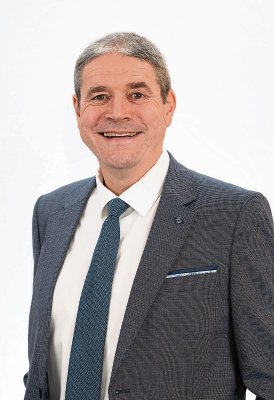
Rob Downes, QFA RPA is a Qualified Financial Advisor and Retirement Planning Advisor. You can contact him through Fairstone Letterkenny (formerly John F. Loughrey Financial Services) by telephone on 074-9124002 or by email on [email protected]