


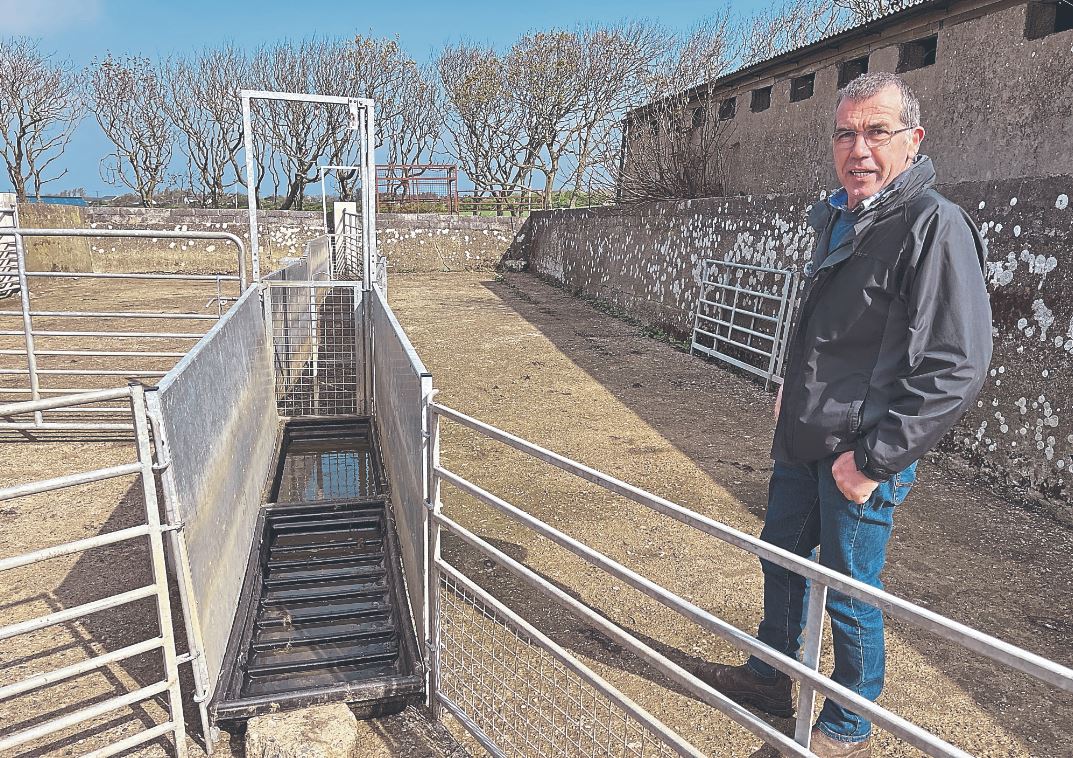


TOMMY MULLIN is a full-time farmer managing a flock of 600 lambing ewes and 20 suckler cows on a farm in Inishowen, located only a few kilometres from Malin Head.
Like generations before him, he has farmed on the Inishowen Peninsula for as long as he can remember.
“Basically, since I was knee high,” he said.
“I’ve never known anything else. I was never any wiser to what farming is,” he laughed.
Along with his wife Kathleen, they raised a daughter and three sons on the farm. Although his sons are all adults now and have full-time jobs off the farm, they have retained their interest in farming and regularly work alongside Tommy in their spare time.
“Only for them, I couldn’t manage to do what I’m doing,” he admitted.
Tommy is hopeful that his sons will continue farming part-time when he retires.
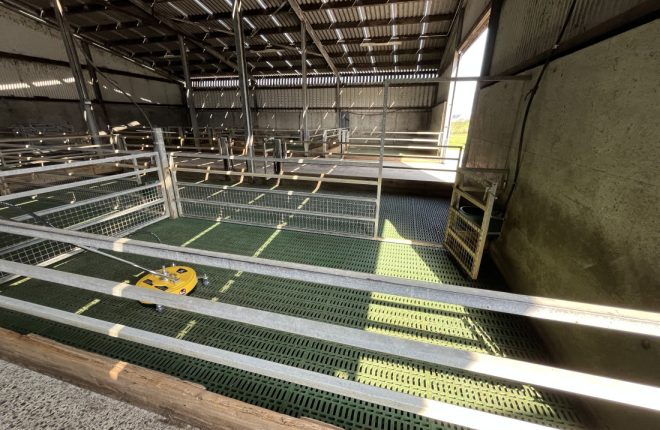
Tommy’s farm has impressive modern buildings and top-class handling facilities.
Any visitor to Tommy’s farm will find impressive modern buildings and top-class handling facilities, which are all evidence of his progressive attitude to animal welfare.
Tommy has signed up to the various animal welfare schemes available to him under the CAP Strategic Plan 2023-2027, including the Sheep Improvement Scheme, the National Sheep Welfare Scheme and the Suckler Carbon Efficiency Programme.
He has chosen scanning (management of pregnant ewes) and meal feeding of post-weaned lambs as his two management options.
Tommy recognises how important the scheme has been for his farm.
“To me personally, it was a lifesaver, and I think that it was a lifesaver for the whole sheep industry in Ireland.
“Sheep farming was at a critical stage, and the returns weren’t there for the work. Had it not come in, half my flock was going up the road.
“Even with the increasing lamb prices now, everything you go to buy has jumped in price.”
Tommy has also joined the National Sheep Welfare Scheme and intends to take Shearing and Clostridial Vaccination of Ewes as his two mandatory management options. Foot Bathing is his chosen voluntary management practice over plunge dipping.
“They’re all good management practices. But I think that plunge dipping should be compulsory anyway. I sometimes see sheep scratching themselves in fields that I’m passing, it’s cruel.”
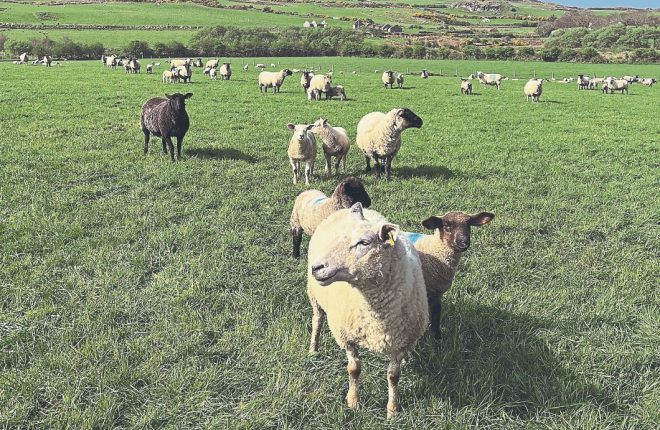
Tommy manages a flock of 600 lambing ewes.
When joining the Suckler Carbon Efficiency Programme, Tommy found all the options were suitable for his herd as they were all already part of his cattle management regime.
“SCEP suits my system as I use only AI on the cows, and all bulls used over the last number of years would be 5 stars,” he said.
Much of Tommy’s farm is in a designated Area of Natural Constraint and receives a payment accordingly. His commonage areas are currently enrolled in ACRES.
Tommy is also participating in the Eco-scheme. He is attempting to reduce emissions from the farm without affecting production by using a Low Emission Slurry Spreading system.
He also trialled using protected UREA in 2024, but the difficult growing conditions for much of the season did not help. He is using it again in 2025 and is hopeful that he will see the full benefits of the product in more favourable utilisation conditions.
Tommy has seen farming evolve significantly since he started. “There’s been massive changes. I’ve had to become more intensive.”
He aims to have at least 90 per cent of his lambs sold off farm to the factory. His beef is also sold to the factory. Everything is finished on the farm.
“Technology has moved on so much, you nearly need a secretary for registering calves and genotyping them.
“With sheep, it’s the same, you must write a dispatch docket for every ewe going to the factory.”
All his lambs are currently sent to Irish Country Meats in Wexford for processing. It is because of the long distances from north Donegal to processing factories in the rest of the country that Tommy became a founding member of the Inishowen Lamb Producers Group when it was formed in 1989.
This was an effort by lamb producers in the area to collectively negotiate prices and organise transport.
Tommy has joined the board of Sheep Ireland in recent years and drives to Cork for meetings several times a year.
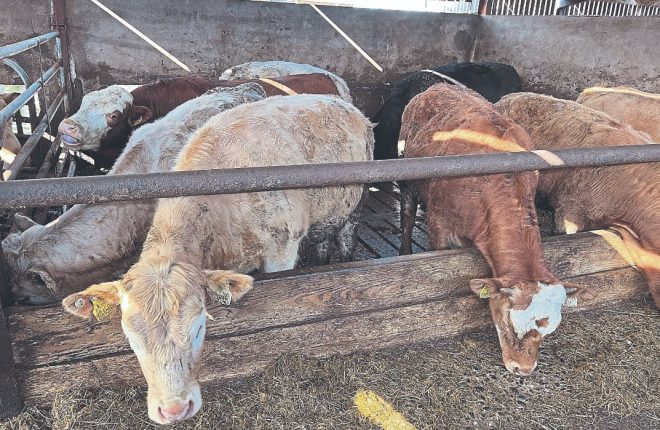
He also has 20 suckler cows on the farm.
Sheep farming, particularly hill sheep farming, has its challenges, but Tommy believes that there is a future in the industry if farmers can cope with a changing environment. . He is delighted that his three sons are committed to carrying on the family tradition of sheep farming in north Donegal.
“I remember hearing an old man say one time, ‘To be a proper sheep farmer, if you weren’t reared by a ewe, you needed to be reared with one.’”
The various schemes available under the CAP Strategic Plan 2023-2027 are helping to ensure a future for this way of life that has been practiced on the Inishowen Peninsula for countless generations.