





This week’s Channel Hopper TV Column by Paul Bradley
Reacher
Amazon
Ludwig
BBC1, Thursday, 9pm
My Brilliant Career
Netflix
Buried With Michael Sheen
BBC2, Monday, 9pm
Reacher is back. He’ll be hard to miss: not only is the character a “250-pound ex-soldier” with a way of getting in people’s faces, but Amazon is inordinately happy with the whole franchise, knowing it has a built-in audience and numerous books to pick from as long as people keep watching.
And, based on the first episode of the new season, anyone who’s watched it before is unlikely to switch off now.
The first new episode wastes no time, now that we know who Reacher is and how he rolls, in throwing him into a new conspiracy requiring his considerable brains and brawn: a late-night subway ride in Philadelphia turns shocking when a fellow passenger takes her own life in front of him, and within minutes, federal agents of some stripe are hunting a missing USB drive they believe she was carrying.
What could be on it that is so important? It’s a nifty way to kick off a season, and it allows Reacher (and us) to meet new characters of uncertain intentions while brushing up against a rising political figure.
Reacher has never pretended to be prestige television. It delivers what it promises: a laconic hulk who can’t stand injustice and refuses to be intimidated.
Alan Ritchson remains a real draw: he’s never going to be mistaken for a classically trained actor, but his physical command of every scene is impressive to see, and he’s just likeable enough to make Reacher a watchful, slightly prickly character.
If the new season hits most of the same beats as usual, some of the dialogue feels more playful; and if you’re watching for the fist-fights, they definitely feel more bruising, more Bourneishly inventive than we’ve seen in older seasons. It’s broad, unpretentious entertainment, and perfectly enjoyable for it.
Ludwig
There’s a wariness in returning to a show that you worry might have lost its raison d’être at the end of season one; but, based on its first new episode, Ludwig’s second outing seems confident in its cosy self.
David Mitchell is back as the puzzle-obsessed John, now operating openly as a “crime scene consultant” for the Cambridge police rather than secretly impersonating his missing detective brother; that’s the shift that costs the show one of its best running gags, so you can only hope that, in return, it lets the lead character breathe a little more.
It looks like it will. Freed from the strain of a double life, John can throw himself fully into solving the murder of the week while quietly chipping away at the deeper mystery of what actually happened to his twin.
It’s smart structuring, with the Cluedo puzzling up front, and the overarching conspiracy behind it.
The first episode involved a stab in a darkened theatre, though mainly it’s just an excuse for John’s elaborate lateral thinking: the kind of thing that would appeal to, say, fans of Richard Osman’s novels or gentle Agatha Christie productions.
So there’s less will-he-get-caught tension, if tension is the right word for this show, and there’s not a lot of drama, if that’s what you come here for; but the scripts (and some visuals) are still dotted with witty dialogue and clever little gags.
Anna Maxwell Martin’s role as Lucy, John’s sister-in-law, has been upgraded, while Sian Clifford and Mark Bonnar both bring extra colour as a shifty MP and a weary journalist.
Mainly, though, Mitchell is so perfectly cast that you could hardly dislike the show even if it’s not for you: he’s not exactly an actor, but his nervy, fastidious energy is always entertaining (and, honestly, his panic when people do normal but unexpected things – like pulling in to park while he’s in the passenger seat – rings weirdly personal bells for me).
My Brilliant Career
Netflix’s new adaptation of My Brilliant Career is a good-looking show that, you sometimes suspect, has forgotten it’s set in the 1890s, in a rural Australia largely dominated by variously prissyracistpractical English colonial attitudes.
The production design and cinematography have real polish, but the overall feeling is of-the-moment rather than of-the-period, which can sometimes give it freshness, but sometimes undercuts the sense of reality.
As Sybylla (played with irresistible energy by Philippa Northeast), our reluctant heroine is sent to live with her auntie and finishing-school granny (Anna Chancellor as the granny character; ah, so soon?), where she finds herself presented with marriage prospects that clash with her own aims to experience life and become a writer.
For the most part she’s a bratty, fun character on the screen, though there are moments when she does just seem slightly rude, and you find yourself wishing she’d settle down and read the room just once. A minor gripe, maybe, but it can make her harder to root for than the show seems to realise; while a wider sentimentality undoes some of the show’s sharp work elsewhere.
But the series excels in its sense of place, and its performances; the cast all do excellent work with characters warmer and less two-dimensional than in many similar shows.
For all its modern trimmings, though, the main arc follows a fairly conventional path, more Sunday-night costume drama than it deserves, and not really upending the patriarchy the way it might. But conventional isn’t the same as bad: it’s not essential, but it’s brisk and mostly entertaining.
Buried With Michael Sheen
If it turns out to have uncovered what it seems to have uncovered, Buried With Michael Sheen could be one of the most important pieces of television this year.
It also suggests another possible career for Sheen himself: across two parts, the actor has been guide, investigator and interviewer, digging into allegations of chemical contamination in his native Wales. The result is part documentary, part indictment.
The subject is the alleged dumping of PCBs — banned carcinogenic “forever chemicals” — in Brofiscin Quarry, South Wales, by the notorious Monsanto Company between 1965 and 1972.
Sheen admits to having become obsessed with the story, but his approach here is wisely low-key, resisting the feelgood victories of, say, the film Erin Brockovich (which covered similar territory), in favour of something bleaker and more honest: legwork, testimony, and grief.
It’s a story Sheen initially discovered online, with farming consultant Douglas Gowan (with only weeks to live) claiming the people of Wales had been poisoned for decades; and over the course of his investigations, Sheen uncovers campaigners, deathbed confessions, and evidence of disease even among animals in the area.
It’s sometimes hard to watch, but that’s part of the point: it shows ordinary people left to fight impotently against a corporation armed with vastly more resources, lawyers, and time.
Fearful of corporate vengeance, no doubt, the BBC have added disclaimers to note that the matter is still being disputed. That caution is appropriate for now, but when barrels of poison have clearly been left untended and possibly leaking for years, and illness rates are that high, and local farms have toxin levels 2,000 times higher than is safe, a little accountability and care would also be appropriate, even if only to help set people’s minds at ease.
Until we rise up and really bring big corporations to heel, this is whatever remains of our future.
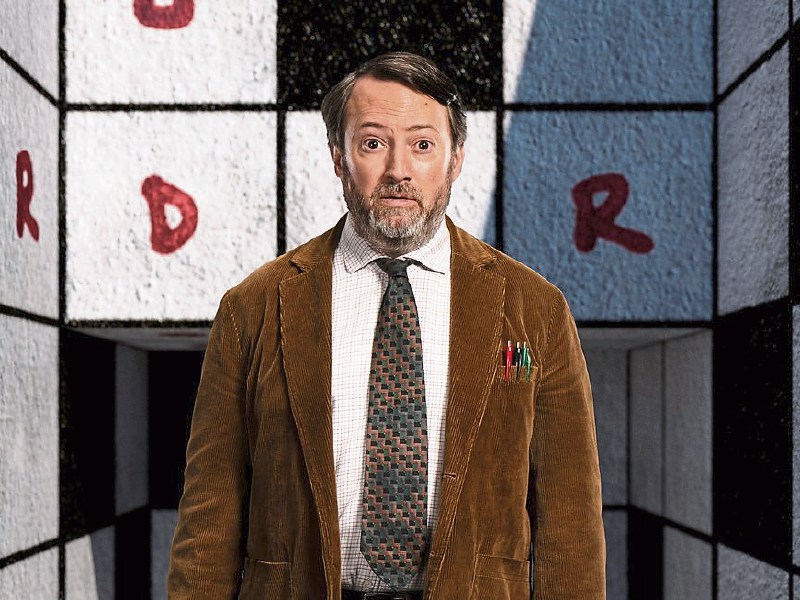
David Mitchell stars in Ludwig.