


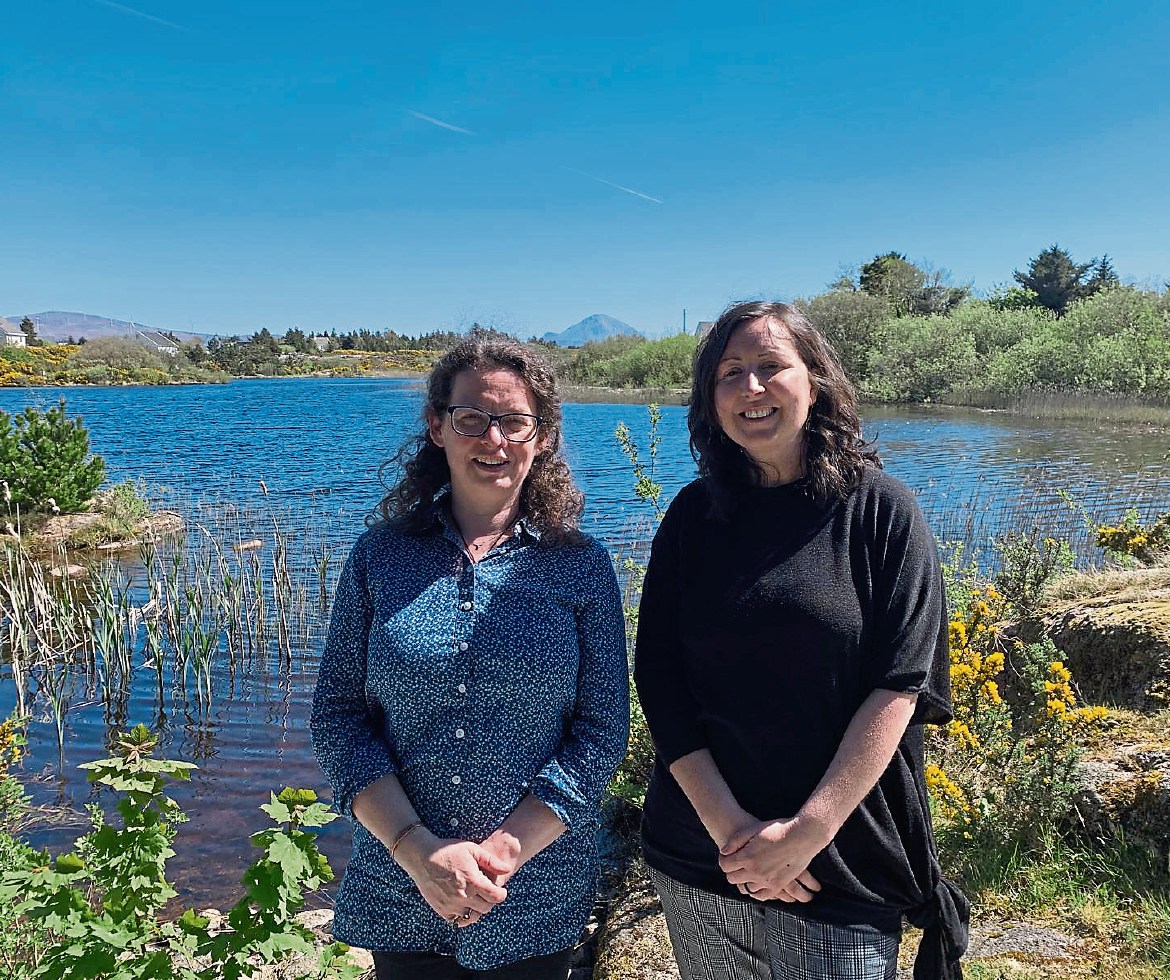


A NEW initiative in Áislann Rann na Feirste is turning waste into art while bringing the community together in creative and practical ways.
CIORCAL is an ambitious circular economy and arts project, comprising of monthly fairs and workshops, breathing life into the rural Gaeltacht village.
Behind the initiative is Maria Coleman, Bainisteoir at Áislann Rann na Feirste, who has been instrumental in shaping its vision.
The project is rooted in the concept of the circular economy, a sustainable model that tackles overconsumption by reusing and repairing products as much as possible and preventing them from ending up in landfill.
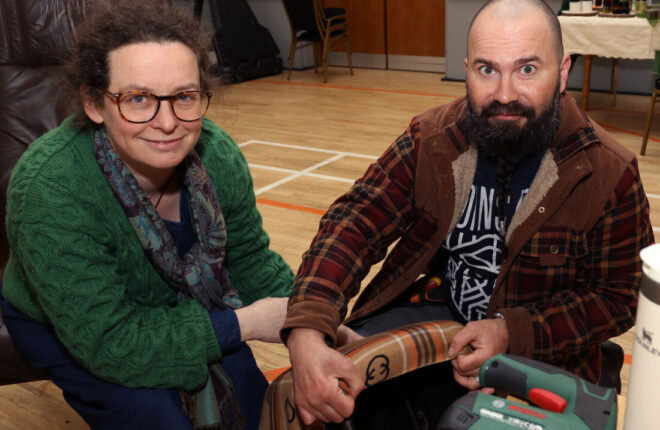
Maria Coleman, Manager, Áislann Rann na Feirste with Rad Knaga at the upcycling market. (Photos: Eoin Mc Garvey)
While the term is often used as a buzzword or a ‘greenwashing’ marketing technique, Maria believes the idea itself is far simpler and more grounded.
“What we are calling the circular economy is something that would have been the way that people did it in the past anyways – you make do and mend,” said Maria. The saying dates back to WWII, when people were encouraged to repair and repurpose rather than buy new during times of rationing.
Maria was inspired to promote the circular economy after learning that Donegal has the highest level of landfill waste in the country. That reality, combined with her own background in art, helped shape the creative direction of the project.
An important voice within the initiative is Méabh Mackel, who emphasised that what we often define as waste still holds significant value. She pointed in particular to textiles and clothing, which are frequently thrown out instead of being donated, reused or repurposed.
CIORCAL operates through two main strands. The first focuses on workshops that encourage people to creatively reuse and repurpose waste materials, especially textiles.
The second centres on community engagement, promoting the initiative through events such as their monthly fair, the Aonach Ciorclach, which has been running since last September and has developed an almost festival-like atmosphere.
With stalls from local makers and sellers, face painting and food trucks, there is something for everyone, drawing people of all ages into the community centre.
Méabh, who runs her own business Lon Dú creating artisanal soap, first became involved when she set up a stall at one of the early Aonach Ciorclach. Since then, she has taken on a role as a project worker, focusing on implementing and expanding the initiative.

Méabh Mackel of Londú at the upcycling, creative community market in Áislann Rann na Feirste.
She described the monthly fair as an accelerator for the wider project, helping to redistribute money within the local community. From homemade jams and preserves sold in recycled jars to jewellery crafted from locally sourced materials, the fair showcases how creativity and sustainability can go hand in hand.
Even within her own business, Méabh incorporates circular practices, using coffee ground waste from a local café in her soap products.
Alongside the fair, the initiative also runs Caifé Cóirithe, a free repair café. Each session has a different focus, with last month centred on restoring small furniture. The upcoming fair will focus on clothing and textiles, where visitors can bring items in need of repair, such as trousers to be hemmed, zippers to be fixed or buttons to be replaced, all free of charge.
Maria hopes that in the coming months, workshops such as sewing and recycled material art classes will run alongside the fairs, further expanding the project’s reach and impact.
Another innovative strand of the initiative is Vinted Beo, where the Áislann lists pre-loved clothing on the popular platform on behalf of community members. By uploading regularly, they gain better visibility within the algorithm, increasing the chances of sales.
Once sold, individuals can receive their earnings or choose to donate the proceeds back to the community centre. The clothing is also brought to the monthly fair, allowing people to browse and buy in person.
The response to CIORCAL so far has been overwhelmingly positive, with both attendees and vendors recognising its potential.
“People have said to me ‘I will be back, because I really want this to work’,” Méabh said.
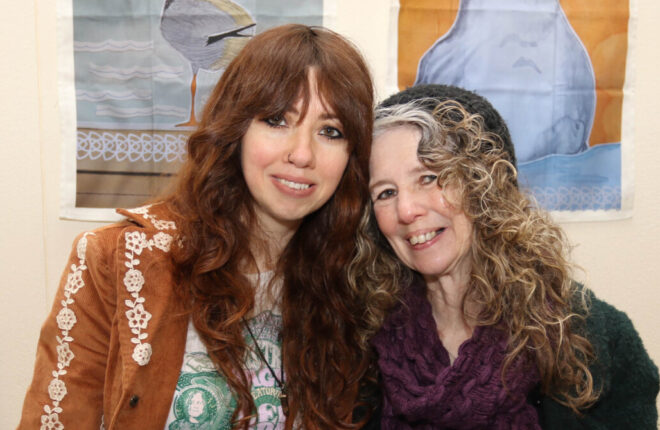
Samantha and Susan Johnston of Seagull Island Design Studio at the market event in Rann na Feirste.
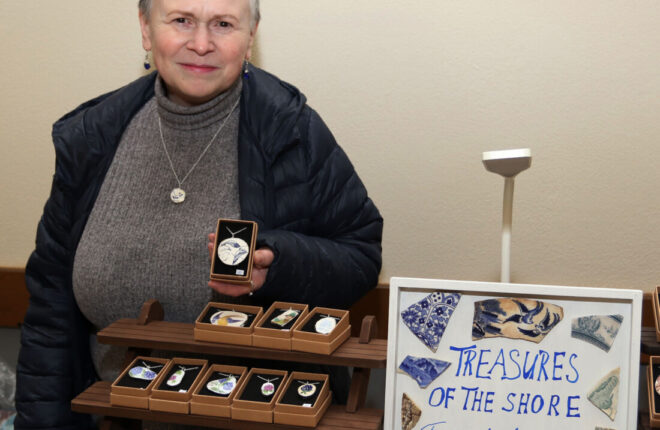
Kristina Ferry with some of her handmade creations at the Áislann Rann na Feirste market event.
Beyond sustainability, the initiative also addresses broader social challenges.
It is helping to tackle high unemployment in the Gaeltacht community. In Rann na Feirste male unemployment is almost twice the national average and female unemployment is nearly three times higher, making it one of the most affected areas in the country.
“So what we are doing is a circular economy project, because we know the economy here has to be realistically able to sustain itself in order to keep the beautiful Gaeilgeoirs here… we are hopeful that we can make ways for people to make some money and stay here.”
Increasing footfall to the Gaeltacht and promoting the Irish language are also key aims.
Méabh explained that the fairs are inclusive to all levels of fluency, whether someone has a cúpla focal, is learning or is fully fluent.
“At the fair everyone is welcome and we will try and support people to use what Irish they have,” she said.
Helpful phrases and cheat sheets are placed throughout the hall, encouraging people to buy, sell and even barter as Gaeilge.
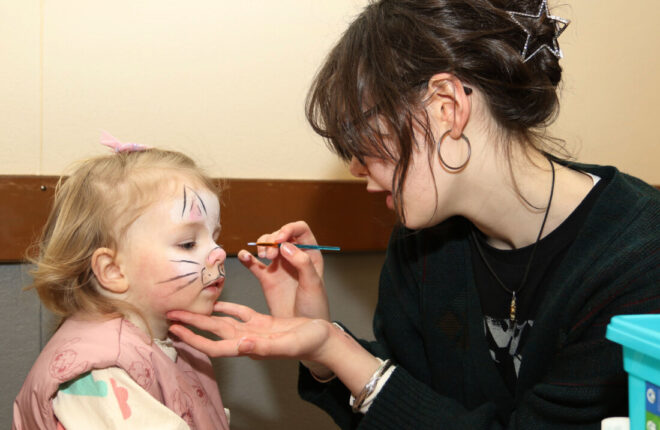
Áibhín Ní Dhuibheannaigh has her face painted by Clíona Ní Scolaí at the market day in Áislann Rann na Feirste.
Looking to the future, Maria hopes to build on this momentum by introducing art competitions through local schools and developing a weekend residency programme.
There are also plans to establish both indoor and outdoor art exhibitions, ensuring that the creative and sustainable ethos of CIORCAL continues to grow within the community.
Upcoming dates for the Aonach Ciorclach are May 9, June 13, July 11, August 8, September 12, October 10, November 7 and December 5.
The initiative is currently funded by the SSE Airtricity Green Generation Community Fund which supports communities like Rann na Feirste and empowers them to create a greener and more sustainable future.
For more information, visit www.ciorcal.org.