




By Thomas Maher
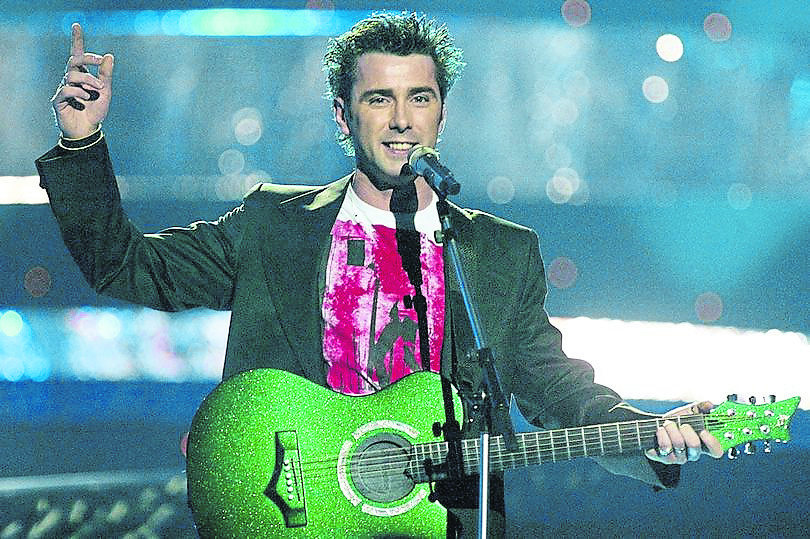
LIFFORD musician and former Eurovision Song Contest entrant Mickey Joe Harte has said he is “very proud” of RTÉ and of the country for taking a stand by not taking part in this year’s Eurovision due to Israel’s continued participation.
Ireland, along with Spain, the Netherlands and Slovenia, has decided to boycott this year’s Eurovision Song Contest after the competition’s governing body allowed Israel to compete, despite these countries warning that they would withdraw over Israel’s war in Gaza and accusations of unfair voting practices.
Last year, Mickey Joe was among 70 past contestants from across Europe who signed a letter calling for Israel to be excluded from the popular contest due to the conflict in Gaza.
Harte, who represented Ireland at Eurovision 2003 in Riga with the hit We’ve Got the World Tonight, said he had previously turned down similar requests to sign political petitions, but in this instance he felt he had “no other choice”.
He said he believed Ireland and RTÉ had made the right decision to boycott the competition, adding that he was proud of the country for taking a stand and that, given Ireland’s Eurovision legacy, the move would have an impact across Europe.
“I think it is very much the right decision for Ireland not to take part in this year’s competition and I am proud of the country and RTÉ for making that stand,” said Mickey Joe.
“Ireland has an amazing legacy in Eurovision and we have won the competition the joint-most times, so it will make an impact that we aren’t there. Johnny Logan, who is the most successful contestant in the history of the competition, also backing the boycott has really made a difference. If anybody has the right to speak on the competition, it’s him.”
This year’s Eurovision Song Contest will take place in Vienna, Austria, with the grand final on May 16. Mickey Joe told the Donegal News that he would love to see more countries, including the UK, also join the boycott, and he believes more nations may follow Ireland, Spain, the Netherlands and Slovenia.
“I think that before the contest is staged in May, more countries will boycott the competition,” said Mickey Joe.
“I would love to see the UK also boycott, but I can imagine there is a lot of political pressure on the BBC from the UK government not to do so. I think it is very hypocritical for Russia to be banned and Israel not to be.
“There are lots of people in Israel who do not support their government’s actions in Gaza, and I do feel sorry for them, but countries have to take a stand and say that what is happening there is not right.”
An RTÉ spokesperson said, “Following the EBU Winter General Assembly in Geneva, at which Israel’s participation in the 2026 Eurovision Song Contest was confirmed, RTÉ’s position remains unchanged. RTÉ will not participate in the 2026 Eurovision Song Contest, nor will RTÉ broadcast the competition.
“RTÉ feels that Ireland’s participation remains unconscionable given the appalling loss of life in Gaza and the humanitarian crisis there, which continues to put the lives of so many civilians at risk. RTÉ remains deeply concerned by the targeted killing of journalists in Gaza during the conflict and the continued denial of access to international journalists to the territory.”
Martin Green, director of the Eurovision Song Contest, said he was “pleased” that members had been given an “opportunity to debate” Israel’s place in the contest before the vote.
“It was a full, frank and honest and quite moving debate, but as we can see from the emphatic result, they really came together on a belief that the Eurovision Song Contest shouldn’t be used as a political theatre, it must retain some sense of neutrality.”