


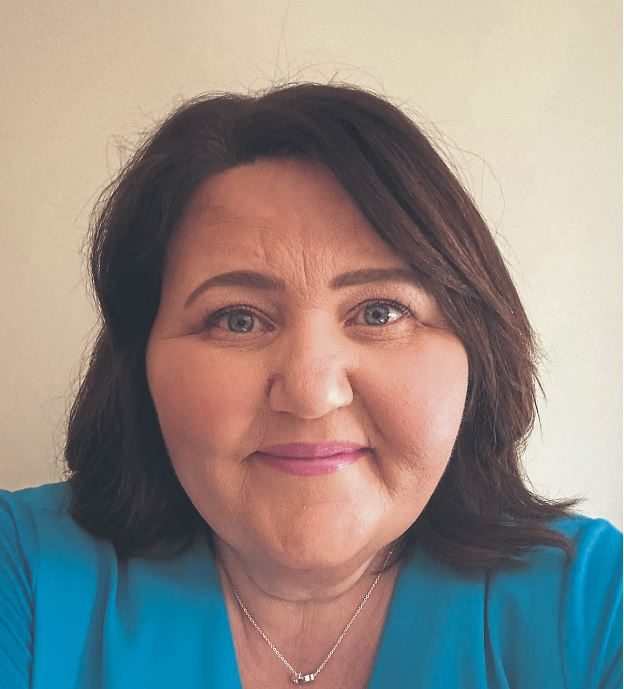


By Sabrina Sweeney
Donegal is full of women who keep things moving, at home, in business, and in community groups, sports clubs, care networks and fundraising committees.
Some of that work is highly visible; plenty of it happens quietly in the background.
But together it’s the effort that gets things done, keeps communities functioning and turns good intentions into real change.
And yet, when you look at the rooms where formal power sits, the contrast is hard to ignore: just three of Donegal’s 37 councillors are women, or less than one in ten.
The council makes decisions on housing, public services, healthcare access, domestic violence supports and childcare.
But when women’s voices are scarce where those decisions are made, it doesn’t just look wrong on paper. It narrows the conversation, which tends to produce narrower choices, even when everyone is acting in good faith.
That’s why Councillor Joy Beard’s appeal for more women to consider political leadership, alongside See Her Elected’s free training workshops, matters.
It offers a route in for women who’ve wondered if they could contribute but lacked confidence or encouragement.
It also challenges the rest of us, because a county doesn’t end up this imbalanced by accident: it happens when the same people keep being urged forward, while others continue to do the work in the background.
The question of whether women are capable has long been settled. The questions now are about the barriers that remain, and what Donegal loses by accepting them.
Representation in councils changes what gets noticed. The National Women’s Council has highlighted research suggesting women councillors are more likely than men to prioritise social issues such as poverty and racism.
Many women also come through community and voluntary work, bringing grounded knowledge of local needs. This isn’t about women being better than men; it’s about different life experience widening the lens, which generally leads to better decisions.
Representation matters for the next generation too. Because when girls don’t see women reflected in leadership, they absorb a message about what is, and isn’t, for them.
Part of the answer to why progress in this area has become stagnant is practical but there’s an uglier element. Politics has always involved scrutiny, but the scale and nature of abuse directed at women in public life is now a deterrent.
Surveys in recent years have pointed to how widespread abuse has become for politicians generally, and how much more likely women are to face gendered harassment: comments on appearance, slurs and threats.
New technology has made it worse. AI-generated so-called deepfakes mean a person’s image can be manipulated into non-consensual sexualised content and shared at speed, designed to humiliate and silence. I don’t know anyone who actively signs up for that.
And then there are the barriers that are as ordinary as they are exhausting. Childcare, for one, remains a major obstacle at local level. Women councillors have spoken about bringing children canvassing because there is no alternative. Without proper maternity leave provisions for public representatives, and without meeting structures that reflect family life, politics quietly filters out those who can’t make the logistics work. That isn’t a personal shortcoming; it’s a design flaw.
None of this is insurmountable, but it won’t shift on goodwill alone. Political parties need to widen recruitment beyond the usual networks, tech platforms and government need to treat online abuse and image-based harassment as a democratic issue, not a side story, and communities need to be honest about what they tolerate.
That’s why the See Her Elected workshops matter. They help make the process of entering local government less daunting, and for those who see a future in politics, they help them feel less alone.
If you’ve ever thought about getting involved, Cllr Beard’s words are worth considering. No one is asking women to have all the answers but showing up is the first step in helping to change what leadership looks like in Donegal.
After all, representation isn’t about box-ticking. It shapes what gets discussed, prioritised and funded, and Donegal can’t keep telling itself that fewer than one in ten women in the chamber serves the whole county.