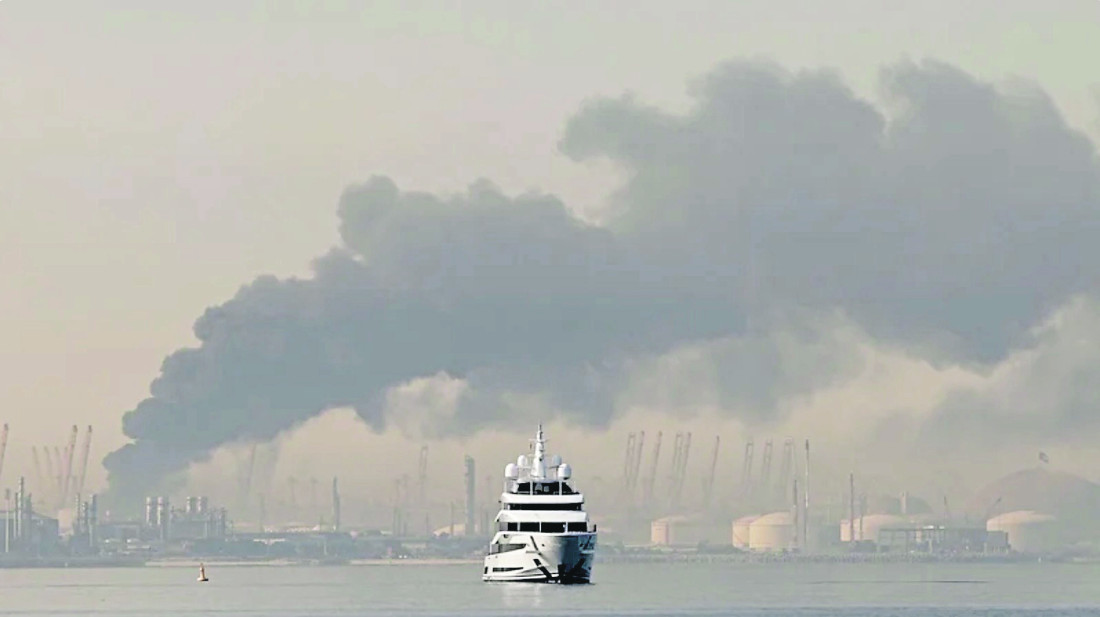


WAR in Iran may be unfolding thousands of miles away, but for households in Donegal the ripple effects have been immediate.
In just a matter of days, the cost of heating a house has surged, showing how quickly a major international crisis can stop feeling like a distant headline and become part of everyday life.
Donegal is especially exposed because oil remains such a central part of how homes here are heated. CSO data published last year found that 74 per cent of rated dwellings in the county use heating oil as their main space-heating fuel, the highest share in the State. So when prices jump, it’s felt quickly and widely.
There is no doubt that wholesale energy markets reacted sharply to the escalation in the Middle East. Reports this week showed Brent crude rising above $82 a barrel, while fears around disruption through the Strait of Hormuz, a route for around one-fifth of global oil and Liquified Natural Gas supply, pushed wider energy markets higher. If that situation drags on, the impact will be felt elsewhere.
Higher crude prices feed into petrol and diesel, and we are already seeing rising prices at the pumps.
Higher gas prices can also put upward pressure on electricity costs in a market like Ireland’s, where gas still plays a major role in power generation.
Then come the knock-on effects: transport becomes dearer, distribution becomes dearer, and the price of everyday goods begins to creep up too.
But even allowing for all of that, the speed of the retail response has left many people asking a perfectly reasonable question: how can prices rise so sharply, so quickly, when the oil already sitting in tanks around the country was not bought at this week’s higher price? That’s not an unfair question. In fact, it’s probably the central question.
Earlier this week, industry commentary suggested the initial effect on retail fuel prices should be relatively modest in the early days. Yet a snapshot of prices listed on cheapestoil.ie on Tuesday night showed 11 suppliers serving Donegal quoting between €610 and €705 for 500 litres, while some companies appeared to have removed prices altogether and were no longer accepting orders.
That is what people are reacting to. Not just the fact of an increase, but the pace and scale of it.
The Taoiseach, Micheál Martin, has said there was “no excuse” for immediate rises at the pumps, and the Government has asked the Competition and Consumer Protection Commission to examine what is happening. That matters because there is a real difference between global market pressure and possible opportunism.
Suppliers argue, with some basis, that prices are set not just by what is already in storage but by international benchmarks and the cost of replacing stock and have insisted no price gouging is taking place. But from the point of view of ordinary households, the pattern often looks the same: increases come through quickly, while any easing tends to arrive more slowly.
The wider context of the cost of living makes the current situation even more serious. New figures reported last week showed that 319,459 domestic electricity customers in Ireland were in arrears at the end of December 2025 – about one in seven households – with the average arrears balance at €466. That was before the latest shock in energy markets.
And while Budget 2026 included a €5 increase in Fuel Allowance to €38 a week, there is no universal electricity credit this year of the kind many households had relied on previously.
There is a tendency at times like this to tell people to use less, turn the heat down, cut back, or somehow absorb the hit. But many households are already doing that. For them, this is not about waste or excess but trying to stay on top of bills that were already difficult before international conflict added another layer of pressure.
People need honesty and scrutiny, but more than that they need some sense of certainty. Some households may be able to wait a week and hope prices ease but many will not.
If this crisis continues, Government will have to do more than ask questions of agencies and monitor the market. At some point, it will have to decide whether it is willing to step in with real financial support for households already under pressure.
The Fresh Take column is written by Sabrina Sweeney and features every Thursday in the Donegal News.