

Nationally, headlines from last week’s Shared Island tourism announcement centred on funding for the Derry Girls experience at the Tower Museum. It’s understandable given the popularity of the TV show.
But there was a strong Donegal story in the same announcement, too. Just over €1 million was awarded to four projects in the county: Oakfield Park in Raphoe, Wild Ireland in Burnfoot, Inishowen Maritime Museum in Greencastle and The Workhouse in Dunfanaghy.
It’s all part of a wider €2.7 million cross-border package under the Shared Island Coast-to-Coast Capital Investment Scheme, covering projects across Donegal, Sligo, Leitrim, Derry and Antrim.
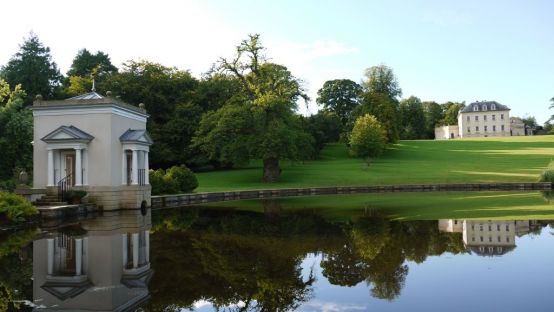
At one level, these are tourism projects. At another, they are investments in how places are explained to visitors through local history, landscape and identity. The scheme refers to interpretation, storytelling and visitor experience infrastructure, and the Donegal projects reflect that in practical ways. Oakfield Park will develop restored vintage railway carriages with interactive exhibits, virtual reality experiences and art displays. Wild Ireland will add an indoor education centre focused on the Celtic Rainforest.
Inishowen Maritime Museum will create a new planetarium show featuring regional stories and local landmarks.
The Workhouse in Dunfanaghy will enhance exhibitions with interactive panels and multilingual audio tours. Such upgrades shape the quality of a visit and can leave a stronger, longer-lasting impression of a place that encourages people to return or recommend it to others.
For local communities, the value goes beyond visitor numbers alone. Economic benefits are part of it, but there is also a cultural and social dimension. Projects such as these help preserve stories and make them more accessible to wider audiences. They also support connection, helping people understand a place beyond a postcard version of it. They provide perspective and make it easier to see people and communities as more than stereotypes.
In a cross-border scheme, that takes on another layer, because the investment is also about stronger links between neighbouring regions through shared routes and collaboration. That investment in storytelling also sits within a wider trend: Donegal is appearing more often on screen. A recent example is Lisa McGee’s ‘How to Get to Heaven from Belfast’, which includes striking Donegal locations. Watching it, I found myself doing what many locals do when a familiar place appears on screen – pausing to check the background and asking: was that Dunlewey Church? Was that really just up the road?
That brief moment of recognition says something. A local landscape becomes part of a story watched far beyond the county. The series also features locations including Errigal and Mamore Gap, showing the range Donegal offers on screen, from mountain roads and upland scenery to landmarks people here know instantly.
At the same time, Irish drama Crá has already shown what can happen when a story is rooted in West Donegal and produced with confidence. TG4 confirmed in January that filming had begun in Gaoth Dobhair on a second series, and also noted that the first series was sold to 68 countries and streams internationally under the title ‘Boglands’.
Together, these developments point in the same direction: Donegal has strong stories, strong settings and growing opportunities to present both more effectively. I’ve seen versions of that in separate work through a PEACEPLUS project exploring storytelling and connection.
The pattern is consistent: people open up and respond when they feel they are being invited into a real story, not a polished surface version. We often describe storytelling as something linked to books, film or performance. It’s also a public skill used by museums, heritage centres, visitor attractions and communities themselves. But it is also in people – in local memory, family histories, the way places are described, and the stories people carry about work, loss, resilience, humour and belonging.
Not every story is written down or filmed. Many are told in conversation, passed across generations, or shared in fragments that help explain a place and the people in it. The stories are not hard to find. The ongoing work is in building the spaces, skills and confidence to tell them well, whether that is in a museum gallery, a heritage site, on a screen, or in the everyday voices of the people who live here. On that front, this week’s announcement looks like a constructive investment in Donegal.