


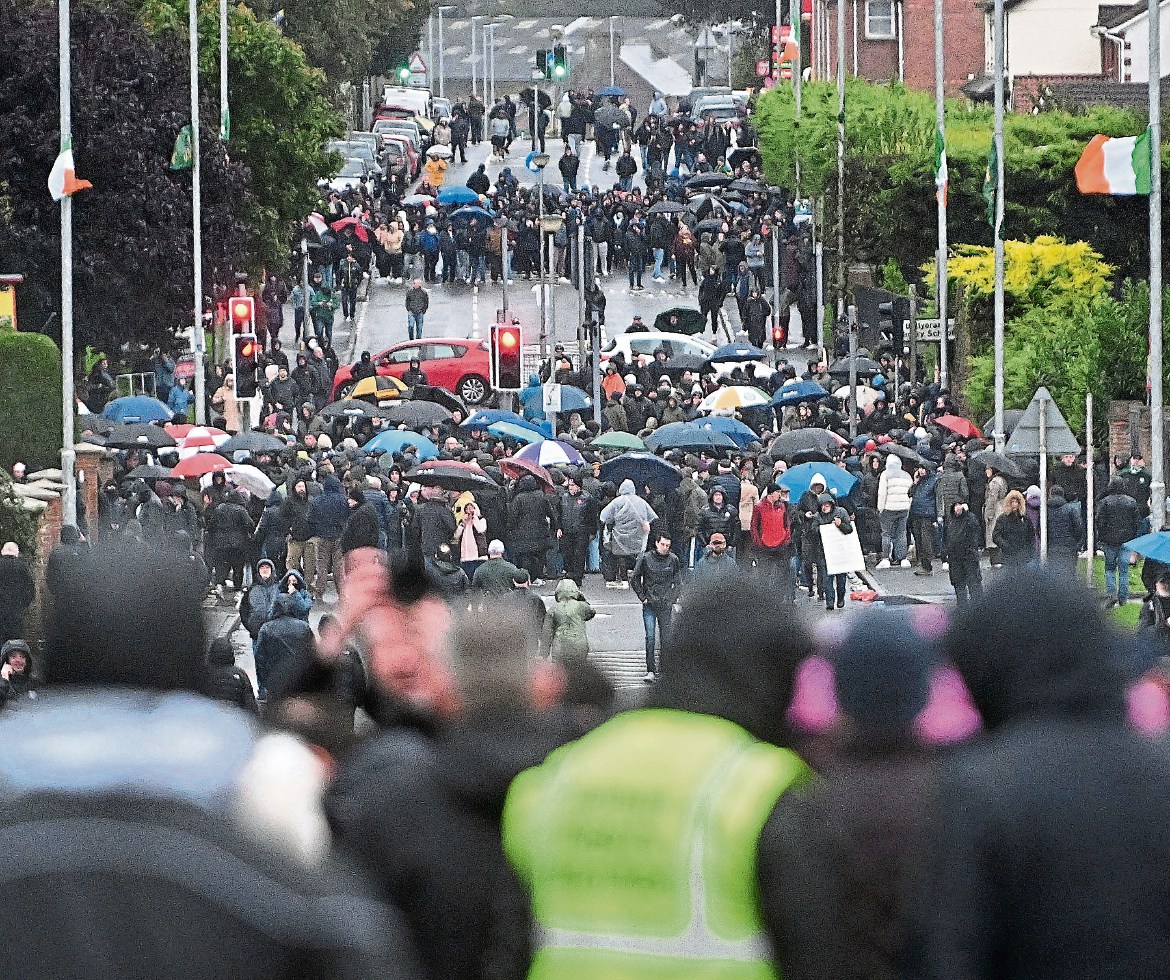


I was a teenager growing up in the North in the 1990s. I haven’t had much reason over the past decade or two to think or talk about Drumcree. But hearing the word again at the weekend immediately brought back memories of how ugly a time it was.
For many, Drumcree conjures up violence, fear, hatred and hurt. Lives were lost and what happened to the Quinn family stands out as the most horrific single incident connected to the standoff.
Brothers Richard, Mark and Jason Quinn were aged 11, 10 and nine when their Ballymoney home was petrol-bombed in July 1998, as tensions around Drumcree were at their height. The three innocent boys died in a sectarian attack on the house where they were sleeping. And for what?
Images of three white coffins remain among the most awful reminders of what that period became; a part of our history many hoped we had moved well beyond.
For almost three decades, the Orange Order continued to seek the right to complete its traditional return route along the Garvaghy Road. Each year the Drumcree church parade went ahead, but the Parades Commission restricted the return along the nationalist road and imposed an alternative route. The underlying dispute never disappeared.
What did disappear were the huge stand-offs and violence of the 1990s and, for more than 25 years, relative peace held in Portadown.
Then, in September, the Parades Commission allowed 35 Orangemen to travel along the Garvaghy Road without bands or supporters.
DUP MP Carla Lockhart said there was “nothing to fear” from 35 men walking silently and in an orderly fashion. Taken literally, that could be perceived as a fair assessment. But it strips away the historical context attached to that road and still felt deeply by those who live there.
The fear expressed by residents is not simply about what 35 men might do as they walk past. It is about everything that came before.
That history was reflected across the border on Monday, when Donegal County Council unanimously supported an emergency motion expressing solidarity with residents and warning that communities “must not be dragged back to the division and conflict of the past”.
Cllr Gerry McMonagle, who proposed it, had spent the previous two days on the Garvaghy Road. Much has been said about the legalities of what has unfolded there. The argument from the DUP and loyalist activist Jamie Bryson is that the parade has a lawful determination in its favour and those blocking it are a “mob”, protesting illegally.
It’s ironic to hear from someone convicted in 2015 of taking part in four unnotified public processions during the Union flag protests about how the rule of law should be applied. But Bryson is not speaking into a vacuum. Events in Portadown are unfolding at a particularly unsettled time for unionism as the DUP is no longer in the dominant position it once was and faces competition from both the UUP and harder-line TUV. Its former leader Jeffrey Donaldson was convicted in June of rape and 17 other sexual offences and is awaiting sentencing.
All the while, other voices have gained influence. Bryson, despite holding no elected office or belonging to a political party, is one of them. But the fragmentation of unionism is not simply a move towards harder-line politics. Some people from traditionally Protestant or unionist backgrounds are also becoming more comfortable crossing cultural boundaries once more firmly drawn.
The Belfast Fleadh offered a recent example, with backing from both the DUP and UUP and participation from loyalist marching bands. Irish language initiatives in east Belfast tell a similar story.
Those are very different directions of travel and that tension is part of the story behind Drumcree’s return.
The dispute over the Garvaghy Road has resurfaced as unionism debates who speaks for it, what it represents and how it responds to a Northern Ireland that has changed considerably since the 1990s. And it has changed.
For an entire generation, Drumcree is history rather than something they remember watching unfold.
For those of us who do remember it, the killing of the Quinn brothers remains the most awful reminder of what Drumcree became. It is a chapter that should never have been permitted to be reopened just because time has passed.
This column is written by Sabrina Sweeney and features every Thursday in the Donegal News.
The stand-off on the Garvaghy Road. Photo: Alan Lewis – PhotopressBelfast.co.uk