




by Paul Bradley
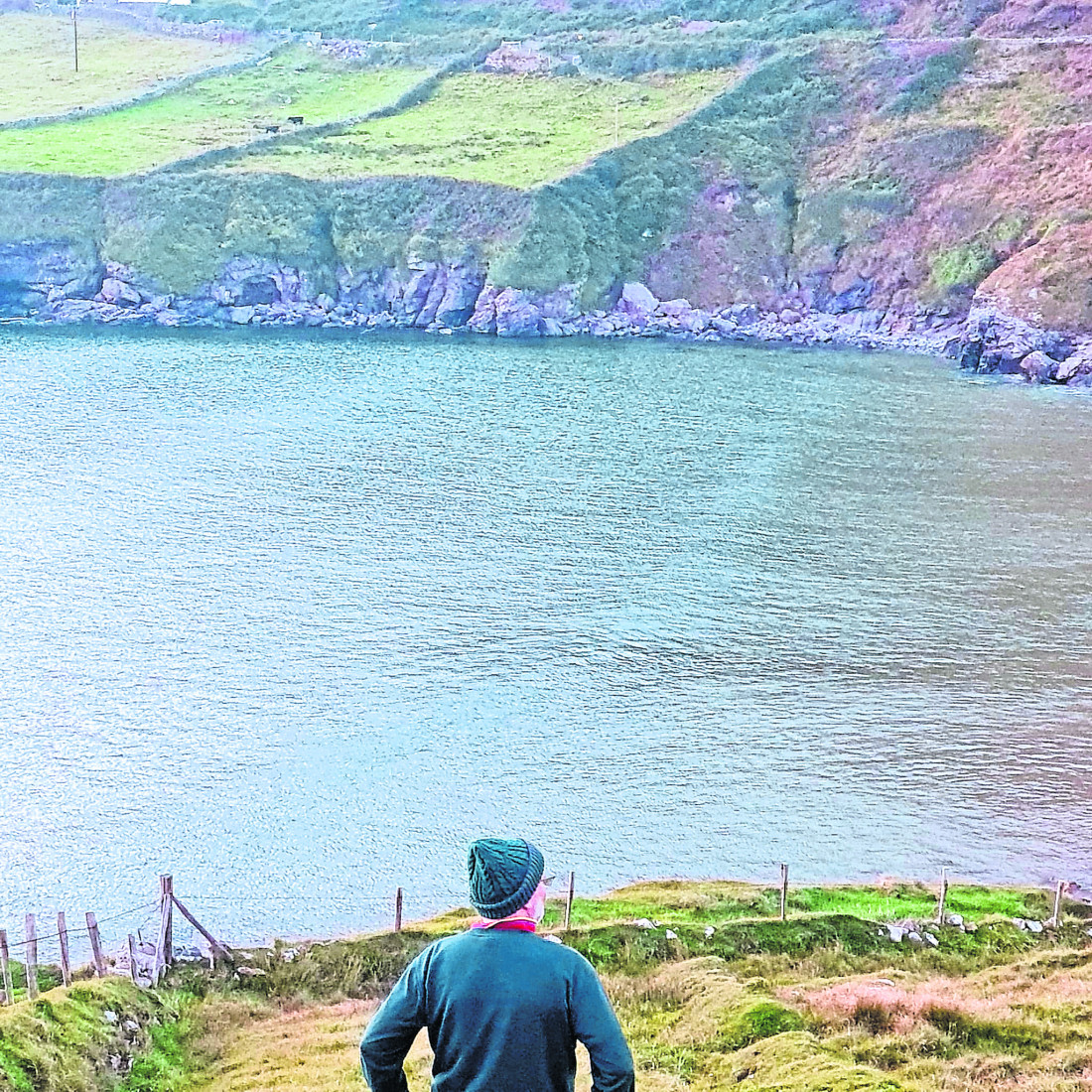
In this week’s The Third Degree, columinst Paul Bradley speaks with Buddhist Ian McGlade.
Hi Ian, thank you for taking this interview. Could you tell us a little bit about yourself first, please?
I grew up on a farm in Co. Down, near the Mourne Mountains. My parents were kind and hard working. They did their best for us.
Growing up, I remember an abundance of undisturbed nature, hazel woods, rivers, fields, bogs, ditches etc. As a child I was imaginative and solitary. I think then I felt more connected to nature and land than to people. This has changed. I have had a stutter since I can recall.
I worked within criminal justice for 20 odd years.
I’m not into sport but took to running as an adult and completed a number of marathons and ultra marathons far and near. I rowed the Atlantic ocean in 2006, departing La Gomera and arriving at Antigua harbour, 73 days later.
You run local Buddhist retreats in places like Ards Friary. Have you always subscribed to Buddhism, or did something draw your attention to it?
Growing up, I think I’ve always had existential questions which didn’t fit into the mainstream thought. Hence my sense of being didn’t really fit in.
Driven by unspoken, unanswered questions, a lot of my abstract decisions in life were probably in pursuit of answers to these questions.
For me, Buddhism has opened the existential doorway. It has simplicity and deep profundity. It connects compassion with wisdom and helps me learn to connect to the power of the mind.
What do you think might be drawing more people to Buddhism in Ireland? (Are people falling away from traditional Christian faiths but unwilling to give up faith altogether…or is there something specific about Buddhism that answers people’s questions?)
I’m not sure people would say they are particularly looking for Buddhism. Maybe they are, but I never ask, or try to convince them either way. We have to arrive at our own decisions naturally.
I do think people struggle and are tired and are drawn towards reconnecting with their spiritual being. All we want is inner balance or inner peace. That’s it, nothing more. We just want to be content. We just don’t know how to achieve this.
From a Buddhist perspective, the only way to do this is to learn to calm the mind. When our mind is peaceful, we are happy. When our mind is unpeaceful we are unhappy.
Buddhist teachings explain how to do this but you don’t have to be Buddhist to practice it. However, we do have to practise it or it doesn’t function.
On the subject of faith, faith can be, but is not necessarily, about religion. I think faith is very much alive within us, we just have to trust it.
Are your meditation classes becoming more popular? What has the response been and, for people thinking about it, what kind of things might a class entail?
My experience has been that people are open minded. They’re all heart. I’m humbled and inspired every time. Attendance fluctuates and it’s not for everyone, but for me it’s not really about the number.
Classes last 75 minutes. It’s a relaxed vibe. No group introductions. People come, grab a cup of tea and a biscuit and relax.
The class includes two guided meditations and a short 30 minute teaching on a particular theme. For example this week the theme has been about learning to control and transform anxiety. Next week it’s about the wisdom of impermanence.
The greater theme is learning to be still and calm our mind using wisdom.
Is there a difference between Buddhist meditation and what people just think of as meditation already?
Within this tradition meditation is defined as a mind that focuses on a virtuous object. This object can be a feeling, a wish, a determination.
Meditation is not complicated. It transforms the mind. The function of meditation is to make the mind peaceful. It relates to mental awareness as opposed to sense awareness.
Is it harder in the noisy modern world, to find time for some kind of meditation – or at least peace and quiet? Have you felt that yourself, and how did you make the changes needed?
I’m very fortunate in that I make time for contemplation and meditation and my role allows for this. Sometimes I go where it’s conducive to be still. I often disappear into Inishowen.
The modern world has speeded up, but this is a sign in itself that we must make time for meditation. If we don’t, our minds will become more turbulent and disturbed.
Buddhism is still associated in our minds with the countries and landscapes of Asia. Have you travelled to experience life and faith there?
I have never travelled to Asia.
What do you like to do with your spare time (interests, other hobbies, etc)?
I live a reasonably quiet life. I read a bit. I’m still the boy who hangs around rivers, hazels, bogs and walks around fields.
Is there anything else you’d like to mention?
Everyone has innate goodness in their heart. Of course we get angry, jealous, bitter, etc, but this is not our nature. At these times our mind is uncontrolled, but we can learn to control it.
Unfortunately we are very skilled at recognising our own and others faults and not as good at recognising our good qualities. Hence we can lose faith in ourself and humanity.
A calm mind is a controlled mind. We become kinder, naturally want to help each other, more compassionate and connected. Meditation gives us the tools to access this.
I would encourage everyone, including myself, to slow down, contemplate wisdom and meditate.
If anyone else would like to take part in this interview, to raise a profile or an issue, please contact Paul at Dnthirddegree@gmail.com