


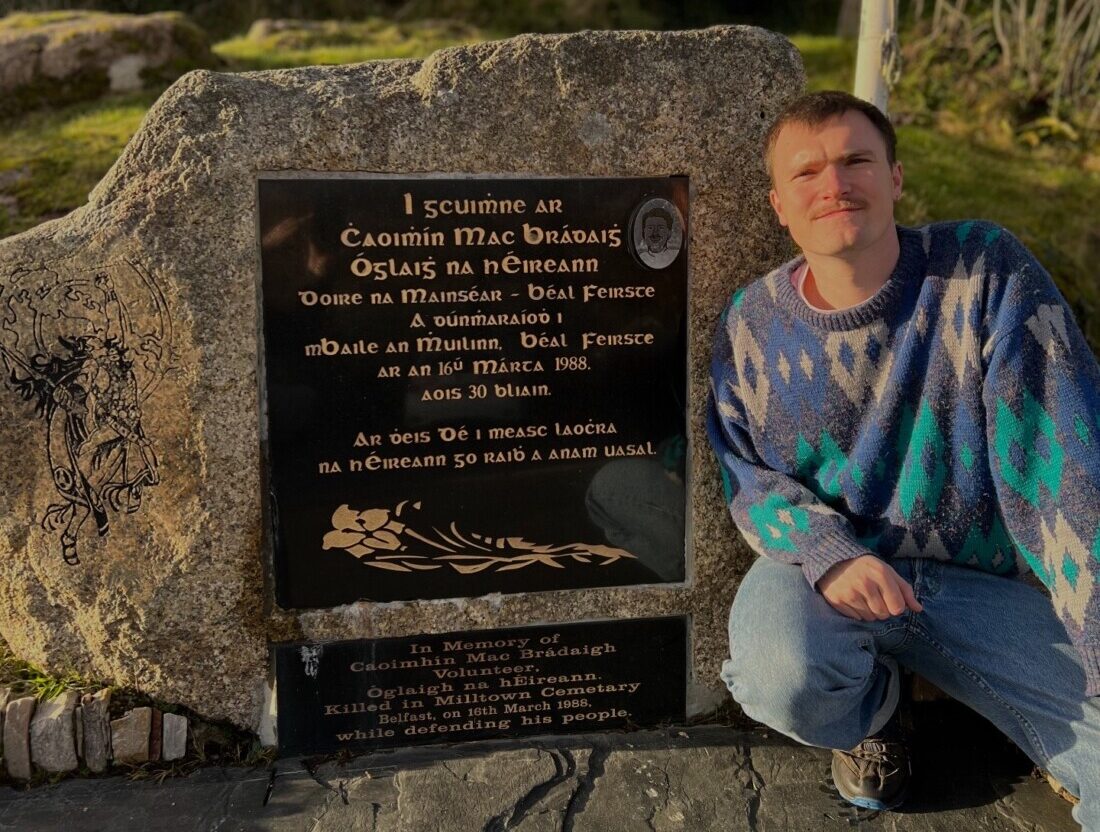


Breandán Ó Luachráin is the nephew of Caoimhín Mac Brádaigh who was killed in Milltown Cemetery on March 16, 1988. He now lives in Donegal where his uncle is fondly remembered.
THIS year I turned the same age as my uncle, Caoimhín Mac Brádaigh, who was 30 years old when he was killed in Milltown Cemetery on March 16, 1988.
My mum’s youngest brother, the youngest of seven, grew up in Andytown, West Belfast, went to La Salle Secondary School, worked as a Black Taxi driver and joined the struggle that defined his generation.
At the funeral of the Gibraltar Three (Mairéad Farrell, Seán Savage and Dann McCann), Michael Stone attacked mourners and Caoimhín was shot at close range, along with John Murray and Thomas McErlean, while trying to stop Stone from harming more people. The weapon used was obtained by the UDA through British state collusion.
At this time my Mum was pregnant with my brother Stiofán who was born one month later in April 1988.
At Caoimhín’s funeral days later, two British soldiers drove a car into the funeral procession and fired a gun in the air. They were taken away and killed by the IRA. My granny, Bríd, at the funeral Mass prayed for all those that died that day and over the course of that bloody week. On the same day, Fr Alec Reid received an envelope from Gerry Adams, containing a letter to John Hume, initiating a dialogue that led to the peace process.
In the aftermath of Caoimhín’s funeral, West Belfast was branded a “terrorist community” by Thatcher and British media. The same language that is used today against Palestinians and Arabs – and now my dear friend Liam Óg Ó Hannaidh (Kneecap), Palestine Action activists and pensioners protesting with placards. From a young age it was clear to me how hollow this accusation is and how revealing it is of those that hold the monopoly on violence.
Féile an Phobail was founded to challenge this narrative of West Belfast. For the past week I have proudly been busy playing music as part of it and in 2022 I got to watch my best friends headline the festival before ten thousand people. It also means a lot to me that I, by sheer chance, became best friends with some younger family members of The Gibraltar Three without realising the connection. We have had some amazing laughs together over the years…a particular Bobby Sands quote comes to mind.
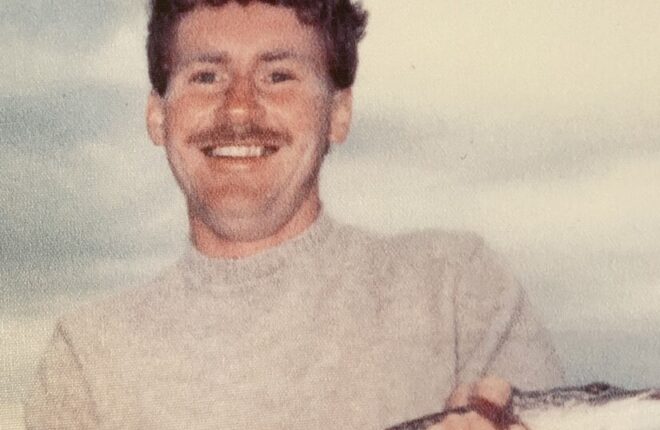
Caoimhín Mac Brádaigh.
Living in Donegal
Now I’m living in Doire na Mainséar, where my granny, Biddy Mhadgie Frainc, is from. This monument to Caoimhín stands outside Leo’s/Tessie’s, and I pass it every day.
He spent summers here, lived here with his granny while on the run in the ’80s, and everywhere I go – from Leo’s Tavern, Charlie Mac’s Taxi and chatting to his best mates and loved ones Desy, Brenda, Brian, and Lisa – I hear great stories about him.
He was an adoring uncle, best at entertaining the kids in the family; he looked out for the lads as they built the GAA in Gaoth Dobhair together; he was charming and social, bringing friends galavanting round bars in his battered red Volkswagen beetle; and he held firm political beliefs, organising marches during the ’81 hunger strikes and getting into a few hairy situations with the guards (that are not mine to share), that meant he once had to flee by boat from Bunbeg Harbour.
As the late Gráinne Mhic Géidigh said at his anniversary, “It was no surprise to anyone who knew Caoimhín that he died as he lived – caring for other people”
His mother being from the Gaeltacht shaped him deeply, and in 1985 he changed his name officially to Irish as an act of identity and defiance. I have chosen to do the same.
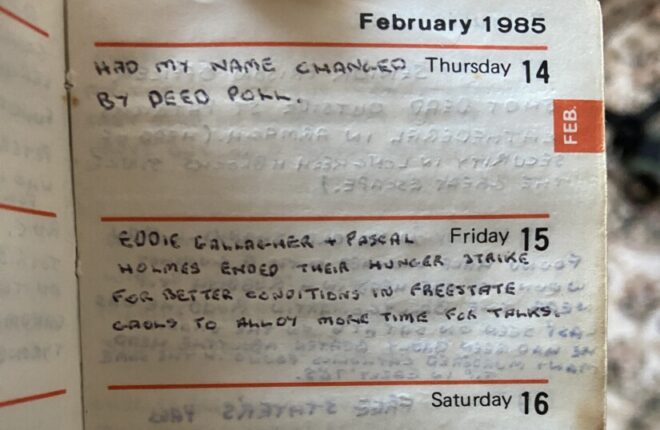
Caoimhín’s Diary (1985): The day he changed his name in Irish officially by deed poll.
Even without meeting him, it is clear Caoimhín has inspired me. Like many in the North, I grew up with the history of this island in my body. It shapes the life I lead – guiding me towards developing our music, language, communities and connection to the land – and it deeply shapes the solidarity I feel with people resisting oppression in Palestine and around the world.
Identity
At this time of year, around St Patrick’s Day, when Irish identity is celebrated, I find myself reflecting on what that identity really means. As spineless politicians flock to the White House, I instead celebrate a different Irish tradition – to boycott. From Charles Boycott himself to the 21-year-old Dunnes Stores shop worker Mary Manning who stood against apartheid in South Africa, it is a legacy rooted in resistance and solidarity.
I feel proud to be surrounded by friends and activists engaged in a growing cultural and language revival, as well as in international movements for justice. That spirit is alive around me. This week, my brother delivered a powerful speech in Trafalgar Square in London with his band Huartan, condemning British war crimes and complicity in genocide. Two years earlier, my sister stood on that same stage with her band BIIRD and recited a moving poem by a Gazan mother to draw attention to the genocide in Palestine and the role of the British state.
Last week, I celebrated with Liam Óg, as the High Court dropped the unjust terror charges brought against him. His defence team included Darragh Mackin, Brenda Campbell, and Blinne Ní Ghrálaigh. Seeing Ní Ghrálaigh represent South Africa in bringing a genocide case against Israel before the International Court of Justice in 2023 was a moment that stayed with me – a reminder that Irishness, at its best, is found in standing with others and speaking for justice far beyond our own shores. In another example, friends of mine – Irish and Palestinian – travelled to Cuba this week, bringing in aid in defiance of the illegal US blockade.
As the Palestinian freedom fighter Ghassan Kanafani wrote: “Imperialism has laid its body over the world, the head in Eastern Asia, the heart in the Middle East, its arteries reaching Africa and Latin America. Wherever you strike it, you damage it, and you serve the World Revolution.”
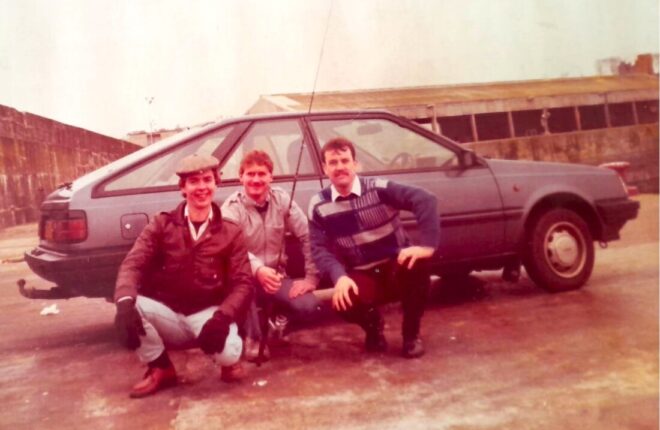
Caoimhín Mac Brádaigh pictured with his friends.
This week marks 38 years since Caoimhín was killed. Visiting his grave in Milltown Cemetery is always a solemn experience as he is buried in the very place he was killed. Though I wasn’t there, it’s impossible not to imagine the events that unfolded on that day – to picture the moments that led to his death, and to feel the weight of that history in the silence that remains.