


By Jonathan Magee
A MAJOR trade agreement between the European Union and the South American Mercosur bloc came into force provisionally on Friday, raising fresh concerns among Donegal’s beef farming community.
The deal, covering Argentina, Brazil, Paraguay and Uruguay, opens the EU market to an additional 99,000 tonnes of South American beef annually, with 13,200 tonnes arriving before the end of this year.
Well-known Dunfanaghy beef and sheep farmer and IFA Donegal county chair Joe Sweeney said the contrast between Brazilian and Irish traceability standards could hardly be starker.
“What are they going to see when carcasses arrive from Brazil in meat factories and it’s already hanging on a hook,” he said.
Mr Sweeney was drawing a pointed contrast with the strict Government inspections applied to live Irish cattle, with Bord Bia-approved farmers in Donegal required to document everything for both Bord Bia and Government support schemes.
An undercover investigation by the IFA and the Irish Farmers Journal exposed conditions in Brazilian beef lots last year, finding that growth promoters and antibiotics were freely available over the counter and that cattle traceability was basic at best.
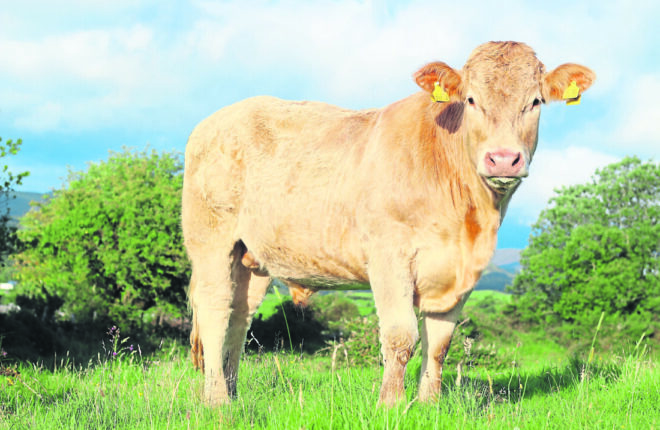
Farmers have raised more concerns over the trade agreement between the European Union and the South American Mercosur bloc
On the question of policing imports at Irish ports, Mr Sweeney said the infrastructure was already there.
“They have the personnel at ports to see what’s coming in, you know there’s nothing that’s coming in that they don’t know about really, and they’re able to stop contraband cigarettes and drugs and all,” he said.
Mart and factory prices are already back €400 a head on last year, despite demand remaining high and the supply of local beef cattle tightening.
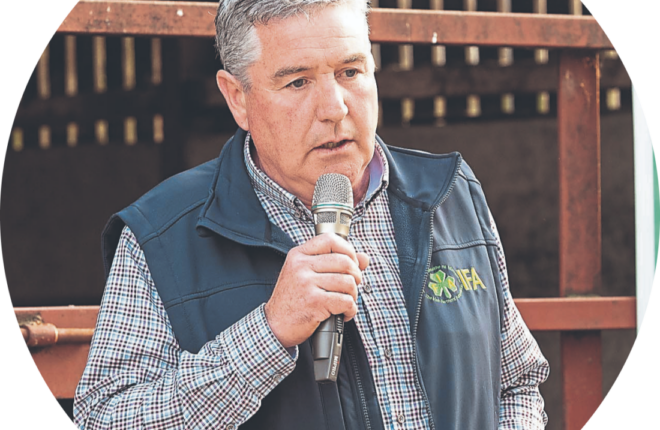
Joe Sweeney.
The picture is further complicated by the Irish beef export market to the UK, which was in decline last year as British buyers sourced a greater proportion of Australian and New Zealand beef — some of which also enters the Irish food chain.
On Australian imports, Mr Sweeney said: “The beef comes in hanging in a cold store trailer.
“The carcasses in Australia are actually sprayed with a preservative to last the six week journey to the UK and often on to Ireland.”
For consumers, he said, it is a case of caveat emptor — buyer beware.
Mr Sweeney also confirmed that an external audit of the corporate governance and structure of Bord Bia is underway.
This follows a stand-off between the IFA, the Government, Bord Bia and the owners of Dawn Meats earlier this spring.
Mr Sweeney welcomed the review but noted it did not directly address the quality of Brazilian beef entering the Irish market.
The closure of the Chinese export market following an outbreak of bluetongue disease has added further pressure to an already stressed sector.
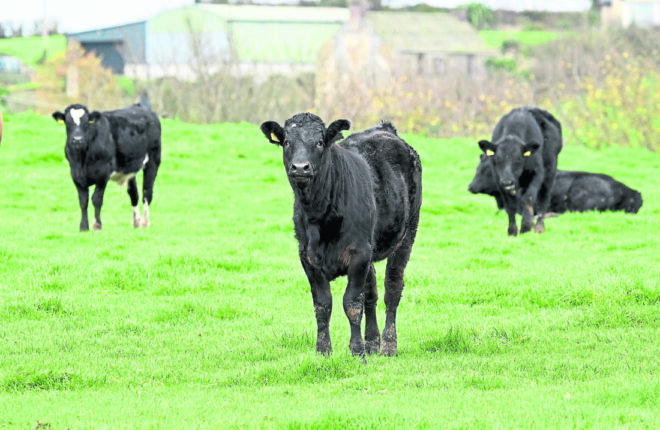
Mr Sweeney acknowledged that Mercosur would benefit some parts of the European economy.
However, he was unsparing in his assessment of what it might mean for Irish agriculture and for farmers here in Donegal.
“Parts of Mercosur could work because some countries could get stuff exported to the Mercosur countries too,” he said.
“ But for agriculture and the farmers it’s not what we wanted.
“Germany gets to export cars to the Mercosur countries and the Mercosur countries get to export cows.
“It’s cars for cows, that’s exactly what it is,” he said.
With the high cost of buying in lighter cattle for fattening also squeezing the profitability of beef finishing, Donegal farmers are watching events closely over the coming months.
They will be hoping that Mercosur does not further tip the balance in favour of the meat factories.