


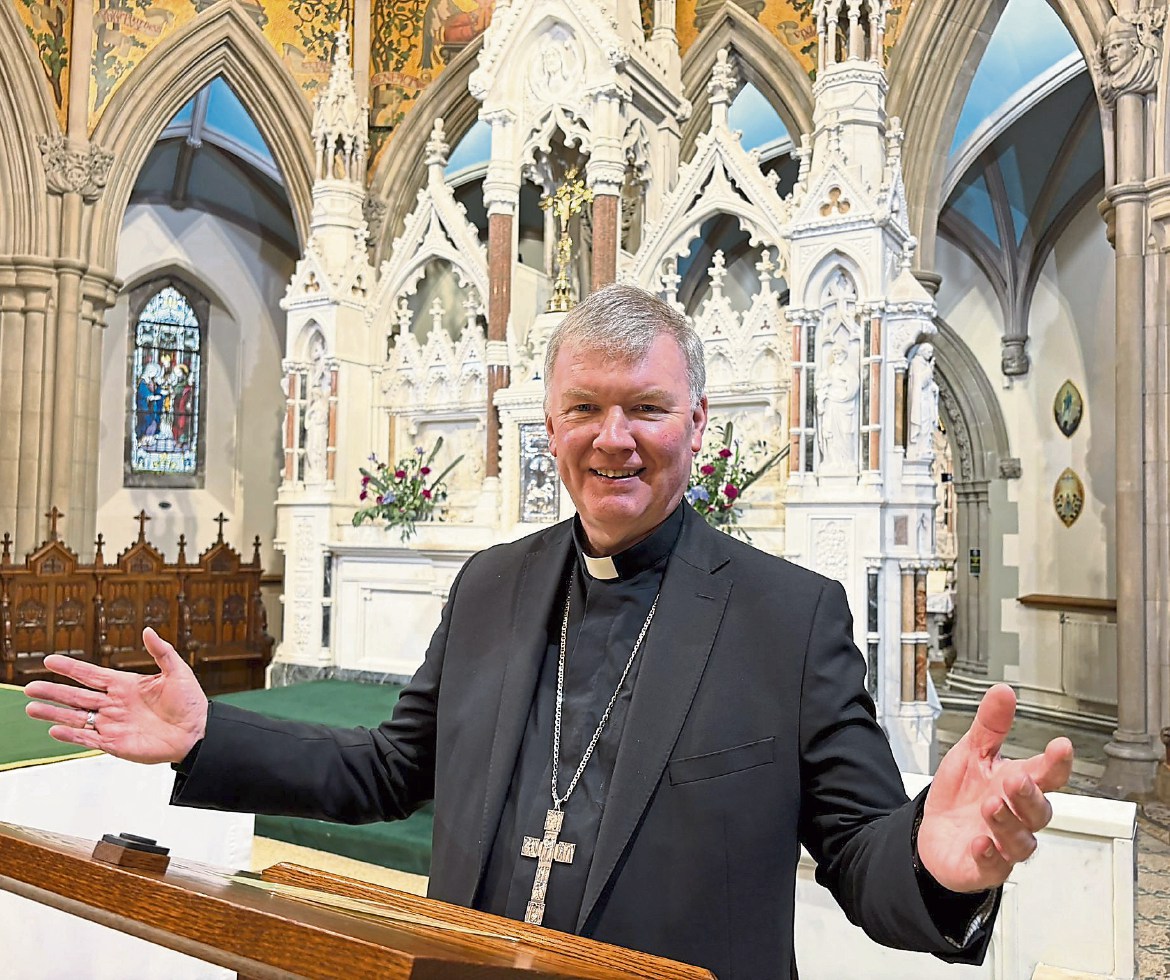


IN his Christmas message, Bishop Niall Coll, who will take over as the Bishop of Raphoe in late January, says the season reminds us that true worth is not found in dominance but in vulnerability.
Reflecting on what Christmas represents, the St Johnston man said: “The Christmas story overturned the way the world thought about power. In the ancient world, as historian Tom Holland points out, greatness was measured by strength, victory and the ability to dominate others. History revolved around emperors, generals and conquerors; the poor appeared only as background figures, if they appeared at all. Into that setting comes a startling and quietly subversive claim: that God enters history not as a ruler enthroned in splendour, but as a newborn child, born to an ordinary family, in a place of no importance. No palace, no army, no display of force – only obscurity, fragility and dependence.
“The birth in Bethlehem suggests that true worth is not found in dominance but in vulnerability. A baby cannot command armies, impose laws, or enforce obedience. It can only cry, rely on others, and be protected – or ignored. Yet this child becomes the centre of a moral vision in which the weak matter, suffering is taken seriously and cruelty loses its prestige. Power is no longer the final measure of value. Attention shifts instead to those with the least ability to defend themselves, and the claim is made that their lives reveal something essential about what it means to be human.
COMPASSION
“Over centuries, this vision reshaped Western instincts so deeply that its influence is now often invisible. Compassion for victims, concern for the poor and moral outrage at injustice feel natural, even self-evident. We forget how strange these reactions would have seemed in a world that admired conquest and success above all else. Even those today who no longer hold religious belief still assume that the suffering of the innocent is a moral scandal rather than a mere fact of life.”
“Ireland offers a particularly striking example of this inheritance. It is increasingly described as a society forgetful of God, suspicious of institutional religion and distant from formal belief. Yet our moral language, cultural memory and reflexes remain deeply intertwined with Jesus. The instinctive concern for the marginalised, the sensitivity to historical suffering and the emphasis on human dignity owe far more to Bethlehem than to any modern theory. Christmas still speaks in Ireland, even when faith itself among many is muted.
“This matters today. When Irish people, like others across the West, respond with horror to scenes of suffering – whether in Gaza or elsewhere – especially concerning the pain of children and civilians, they are drawing, often unknowingly, on this moral inheritance.
“Christmas reminds us that human dignity does not depend on power, nationality or success. It insists that the lives most easily ignored, those of the weak and the vulnerable, are, in fact, the ones which reveal what truly matters,” he said.