




Evolution – BBC2, Monday, 9pm
Little House On The Prairie – Netflix
I, Jack Wright – BBC1, Sunday, 9.15pm
As Charles Darwin wrote at the end of his book On The Origin Of Species, in which he finally explained his theory of evolution, “There is grandeur in this view of life.”
And the theory certainly has complexity and scale – and also the thrill of an ever-ongoing detective investigation, the excitement of bringing new techniques to bear on old problems, regular surprises, and of course, that fantastic cast of characters.
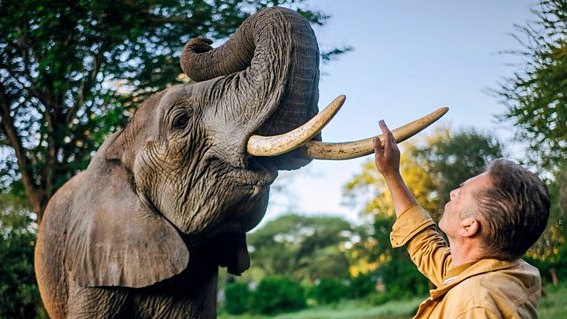
It’s utterly fascinating, so it’s cheering to see that BBC has just launched a five-part natural history series entirely devoted to the subject – with Chris Packham guiding us through billions of years of winding genetic pathways.
In the first episode of Evolution – yes, the title is that straightforward – Packham explores the long history of the elephant. It’s a good choice to start with: a strange animal, but one familiar to even the most casual viewers, and a filmable one we’re all quite fond of.
Of course, like all of us, the elephant’s history goes back 4.2 billion years to LUCA (the Last Universal Common Ancestor), and the film follows that contingent path from simple cells, through mass extinctions and strange turns, to the complex, oxygen-breathing beasts we have today.
It’s all about the interaction of competition and chance, and the need to find your own ecological niche; it’s also, as this film shows, sometimes about invisible and unwitting partnerships, like the one between microbes and elephants that benefitted them both in their individual fights for survival.
The show, I suppose, doesn’t quite have the complexity of the elephant’s trunk, but it’s not far off. Six hundred scientists were involved, and The Open University, and a large visual effects team.
Actually, that’s perhaps where it falters a little: the CGI looks a little too soft and cuddly at times, certainly in comparison with some of the work done on Apple’s dinosaurs in recent years.
Still, it’s the best way to illustrate the long histories of surviving organisms, and there are real moments throughout of beauty and revelation (those first gills, that strange pachyderm dynasty); and Packham himself, clearly loving it all, brings the harder scientific edge (and some wry humour).
Little House On The Prairie
People of a certain age will remember some unspoken rules from 1970s Ireland, one of which was, “thou shalt tune into Little House On The Prairie” as it ran, and ran, for what seemed like forever.
It’s 52 years since it started, but the setting and characters are still so familiar that it was always going to be hard to reimagine it all. But Netflix have done it with a new version that just seems, well, even nicer, than the original.
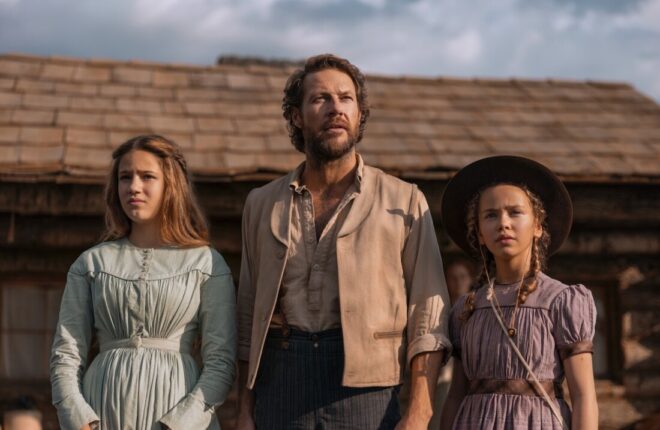
Little House On The Prairie – now showing on Netflix.
Perhaps against expectations, or perhaps because of them, it’s not actually terrible. It’s polished, well-cast, and moves along at a decent clip through the Ingalls family’s Kansas year, beginning with a (terribly edited) scene of their horses pulling the carriage across a river that might just be a metaphor not just for their lives (it’s a struggle but there’s firm new ground just beyond) but for the show itself (will it even make it to the far side with all its heavy messaging?).
As Ma, Pa, Mary, Laura, and the dog arrive in the new town of Independence, they quickly meet doctors and businesspeople of all races and beliefs, and a surly drunk who looks like becoming a real friend to them all.
It’s all very…nice, to the point of feeling a bit chocolate-boxy. It’s also pretty and egalitarian in a way the frontier surely never was (the books by Laura Ingalls Wilder themselves were notoriously racist): clean streets, softly-lit cabins, perfect lighting at all times.
And The Message – about race, land, and how we can all get along if we’re open-hearted – is too obviously preached for my taste; it was always there in the original, but not harped on so much. It’s trying too hard to sweeten a show that was slightly sweet to begin with.
Still, there are some handsome shots, and it’s well-enough performed. The main fun comes from comparing the actors with the originals (or trying to work out which original character this new one will turn out to be).
Is Crosby Fitzgerald a little too young to be Ma? Is this Laura (Alice Halsey) sassier or blander than Melissa Gilbert’s? Is Luke Bracey a bit too generically handsome as Pa (the answer to this is yes – and he also clearly lacks the gymnastic eyebrows with which Michael Landon used to, well, chisel his twinkle).
That alone will probably keep you entertained for a while, even as you miss the mild scrappiness of the original.
I have to say, though, there was at least one serious misjudgement during the first episode. Did nobody see those CGI wolves? What on earth were the makers thinking? In a show about rural humanity in the 19th century American plains, any obvious CGI is a problem. But here it’s worse: cartoonish beasts creeping forward in the dark with their eyes glowing, and the facial expressions and personalities of Disney werewolves. It’s shockingly bad: enough (for a jaded old soul like mine at least) to completely destroy whatever inoffensive charm the rest of the show was working towards.
I, Jack Wright
Somewhere in BBC’s Sunday night drama I, Jack Wright, there’s a version that could be taken fairly seriously: those moody flash-forward interviews, a murder investigation, a dynasty squabbling over a dead patriarch’s fortune.
But we don’t quite get that. If the first episode is anything to go by, we get a soapier, messier, and considerably less subtle drama that, you suspect, is being put out now in the middle of sporty summer because nobody will really notice or care.
The patriarch here is the Jack Wright of the title, played briefly by Trevor Eve. Following his suicide, his third wife, Sally (the annoyingly whispery Nikki Amuka-Bird), and his two sons (John Simm and Daniel Rigby) learn that he had other plans for the fortune they assumed they would inherit. But as everyone begins to gather for the funeral, DCI Morgan (Harry Lloyd) finds something which makes him suspect Jack may in fact have been murdered…
That drama could be quite entertaining, but here it’s somewhat buried under, for example, two warring half-brothers, an ex-wife with a new partner, a scheming daughter-in-law, a young third wife, and assorted lovers and hangers-on.
It’s a lot to remember – and you’ve got the plot twists to consider as well. Maybe it’s no wonder it can’t quite decide if it’s a tragedy or a potboiler.
The murder-mystery structure even feels less like a real plot and more like a device to keep audiences curious: all those motives piling up among such unpleasant people, and a watery detective you’re not really that interested in watching.
It is, let’s be honest, only held back from collapsing into pure trash by actors like John Simm, who, even through hints of boredom, is reliably the best thing in it. At least when he’s in it he raises it to the level of undemanding, unmemorable telly that might suffice in the middle of an overly sporty heatwave; or perhaps it’s an overly hot sportswave.
Whatever, as the makers of I, Jack Wright obviously said.