





Ah, Back From The Brink: is it RTÉ just about saving itself from another pay-for-presenter scandal? No, not quite, but it is a returning show that features the very same Derek Mooney: what say you, is he a presenter, or is he a producer?
Of course he can do both, and officially does so with RTÉ’s nature programming, as part of which Back From The Brink has returned again with some good news stories.
If you haven’t seen it before, it features stories of organisms that have somehow made progress in the modern world – or at least, just survived against the odds, sometimes with human help.
In episode one of the new series, we meet a Galway “Fox Lady” (foxes are increasingly moving into Irish cities), a bat project in Ljubljana, and a wonderful “animal aided design” building policy in Munich. Mind you, one species we could do without is that CGI fox inexplicably used in the credits.
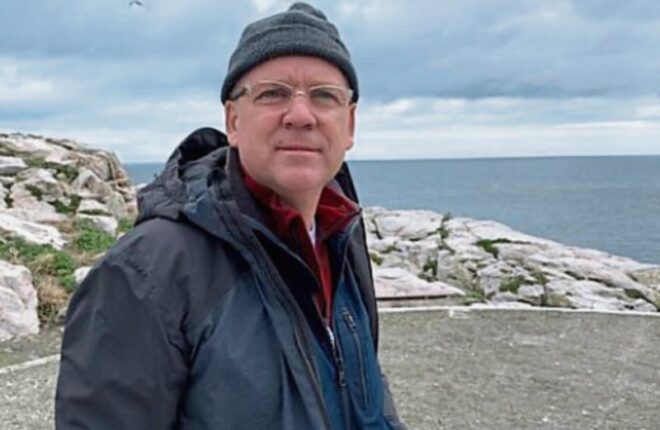
Derek Mooney’s Back From The Brink has returned for another series on RTÉ One.
It’s still a good subject, and, I suspect, a good job, zipping about hither and thither talking to people passionate about interesting things.
It’s efficient enough, though it still feels slightly sterile and Mooney’s jaunty “this just in” delivery can grate in a show about stories that stand out as good largely because the wider news is so grim. I mean, absolutely, these are good, interesting, hopeful stories and we should mark them; all the same, it feels more and more as if they are good news items in the same way as people getting onto a lifeboat was good news in 1912: fair play to them, and we hope they do well, but the ship is still going down.
The Chestnut Man Netflix
For lovers of grey skies and personalities, Netflix’s Nordic thriller The Chestnut Man is back, after a mere five-year wait, if anyone was actually “waiting”.
If you’re like me, you won’t even remember much about the first season: the usual grim murdery thing, but with a recurring theme of chestnuts, because the killer used them as a motif. Well, the second season is also grim and murder-minded, but it’s got a different villain and there are no chestnuts…even though it’s still called The Chestnut Man. Discuss.
This time, Thulin and Hess (Danica Curcic and Mikkel Boe Følsgaard) are in Copenhagen investigating a serial killer with a fondness for playground games, and for leaving his victims in nests in the forest.
We begin 30 odd years back with a startling school outing – and the things the killer says later seem to hint he might have been with that school trip. And in the present day, when they’re not making big leaps of logic in the case, Thulin and Hess spend time glowering at each other, with little bits of dialogue filling us in on their (non-) relationship since the end of the last season.
To be fair, it’s mostly a competent bit of Nordic noir: it’s handsome, the leads are watchable, and the plot moves at a pace, with at least one real surprise.
But aside from the plot-shortening leaps of deduction, and one of those ludicrous killers who know everything about everyone and are everywhere all the time watching them and predicting their moves, it also seems the makers clearly want to haunt us with horror so much that they’re prepared to depart from reality.
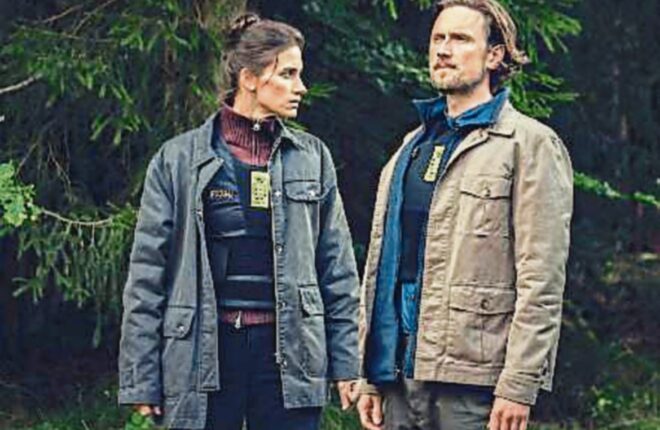
The Chestnut Man on Netflix reunites Danica Curcic and Mikkel Boe Følsgaard as Detectives Thulin and Hess as they take on a new killer.
About two minutes in, an egg falls from a nest and cracks open…and thick blood comes out. From an egg. Not white and yolk, but blood. Have the makers, or the characters, never seen an egg? Has a doctor spoken to that troubled warbler?
The Crow Girl VM1, Thursday, 9pm
Mind you, even if only in its more natural moroseness, it’s still more convincing than VM1’s new drama The Crow Girl, which comes in a kind of self-important “see how dark we are” packaging.
It’s adapted from, yes, a Scandinavian novel by Erik Axl Sund, and promises to be a gritty psychological thriller, with Eve Myles as DCI Jeanette Kilburn, a mother juggling domestic abuse cases with a string of gruesome murders, chasing them all with a tired attitude and the help of her somewhat boorish partner DI Lou Stanley (Dougray Scott, in a relatively secondary role).
Also in the plot is Dr Sophia Craven (Katherine Kelly), who is evaluating a dentist arrested for possessing child abuse images, and letting her icy demeanour conceal her private trauma.
The plot spirals through a series of unpleasant discoveries: the bodies of young men (for a change) dumped with traces of drugs and carrying strange injuries. And there’s a shady figure building a freezer room while whispering suspiciously poetic lines about endless love. It’s atmospheric, yes, but soon you suspect that’s all it is.
Not that there’s not enough going on: in fact the whole raft of subplots makes it feel too busy, and its attempts at social commentary feel out of place.
It doesn’t help that, while the leads do solid work, their characters are not that engaging: too glib, too laddish, too gabby. It’s dark enough that some of its images and themes might disturb you, but as a drama you’re unlikely to care very much.
Good Omens Amazon Prime
It’s tempting to say that the scandal around Neil Gaiman has hampered the third and final instalment of Good Omens.
It’s also true: it’s a show torn between the need for a decent send-off for its many fans, and the fact that Gaiman’s tainted reputation has made it hard to approach properly. Amazon ultimately compromised by condensing the planned 6-part series into a single film. (Meanwhile, it’s only fair to add that a judge has recently dismissed the charges against Gaiman, and he continues to assert his innocence.)
And this finale certainly has a grand enough plot for a full six episodes, centring on the Second Coming, with Jesus (Bilal Hasna) shown as a bit of an innocent wandering the incomprehensible Earth. Meanwhile, Aziraphale (Michael Sheen) and Crowley (David Tennant) reunite again, their ancient relationship fractured by tension and Crowley’s alcoholism (remember, Aziraphale is an Angel, while Crowley is a Demon in sunglasses, but both are fond of humanity and have spent millennia as friends trying to prevent the Apocalypse).
The thing is, while it was good to begin with, Good Omens was rarely more than that: clever, handsome, with a fabulous central pairing, but bordering on incoherent and dotted with uninteresting secondary characters.
And while you might think that, by boiling six episodes into one film, only the good parts of the script would survive, some of the gags that made it make you wonder how lame the full series would have been: there are quips about Jesus liking “deserts” that fall terribly flat, and some old guff about missing sacred artifacts that really should have been dropped or made more of.
In fairness, the two leads are hugely watchable, and even manage to get away with some lazy platitudes, so fans might still think that a half-hearted goodbye is better than none. Based on the script here, it’s at least better than the full six-episode farewell was going to be.