




By Paul Bradley
Creedon’s Musical Atlas Of Ireland
RTÉ1, Sunday, 6.30pm
Furious
Disney+Hulu
Hitler’s Games: Berlin 1936 In Colour
Channel 4, Saturday, 8pm
Dictator: The Hitler Interviews
Channel 4, Saturday, 9pm
Richard E Grant’s Very Modern Odyssey
Channel 4, Sunday, 8pm
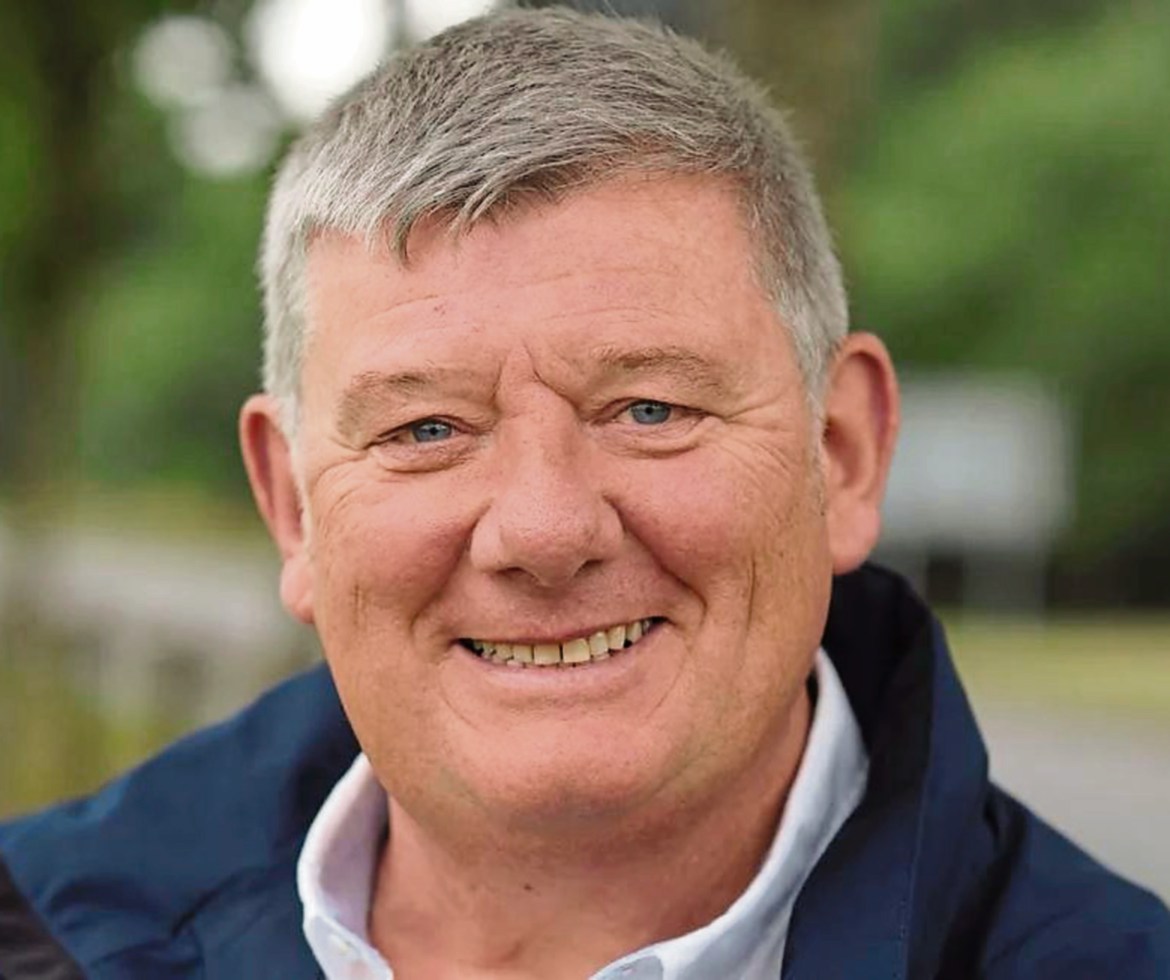
John Creedon is back with his Musical Atlas Of Ireland, although this time he seems not only to be mapping Irish traditions but the even more fundamental question of how music shapes us as listeners.
It’s a clever sidestep, still neatly tied to Irish tradition, with the opening episode exploring the three ancient strains the mythical Irish figure the Dagda would play on his harp: Suantraí, Geantraí and Goltraí – or Lullaby, Joy, and Lament, musical categories as foundational as you could imagine.
The lullaby segment, for example, allows Creedon to ask when and why we first become aware of music, and what might be slipping away as fewer parents sing to their children. Geantraí brings the usual jolt of energy, and of course few sounds capture mourning like Irish music – the Goltraí section brings an interesting first episode to an end.
It’s enjoyable TV for that time slot, with our host happy to chat to artists about their music. Weirdly, though, this particular theme – how and why music affects us – is probably too rich for the bitty, somewhat episodic approach. It deserves an in-depth, well-researched documentary rather than the fairly random, yack-in-the-pub structure we get here. All the same, it’s an entertaining first episode, of interest to anyone curious about the real emotional power of Irish music.
Furious
Despite the odd glimmer of adults at the corporation, you don’t expect too much realism from Disney (which now includes Hulu). But they’ve just launched a new serial killer drama called Furious, whose premise sounds typical – a troubled detective chases a killer – but whose approach immediately sets it apart from the majority of its toothless peers.
For a start, the detective (actually ex-detective, now an FBI agent working with old colleagues) is female – and so is the killer, working her way through a series of men.
Emmy Rossum, in the lead role of Alice Black, is smart, wounded and angry (for reasons slowly revealed) and never entirely likeablesoftkooky in TV-heroine fashion; opposite her, Lola Petticrew is Catherine, the young woman she is hunting, whose own rage is also slowly explained even as she goes about her murderous business.
The show has the nerve to let you see her point even as you’re horrified by her (although Petticrew’s whispery delivery might mean you’re too busy shouting “what?” at the telly to really sympathise).
The writing is strong throughout: smart exchanges, natural-sounding exposition, and even some genuinely surprising monologues.
Scoot McNairy is the nearest thing to a big name, and he brings warmth as Alice’s closest ally, a man who has reasons to love and resent her, basically giving the show room to breathe between its more unsettling moments. Most of all, it’s the willingness to be emotionally complicated that raises this above the genre standard: edgy and intelligent, and so far compelling.
Hitler’s Games: Berlin 1936 In Colour
It’s 90 years right now since the 1936 Olympics, so – perhaps not having had its usual range of Nazi films lately – Channel 4 has delivered Hitler’s Games: Berlin 1936 In Colour as part of a largely Hitler-themed Saturday night. Disappointingly, it doesn’t bring much startling new information or previously-unseen moments: it’s mostly footage we’ve seen before (famously of Jesse Owens), just newly colourised for TV.
But it earns its place thanks to a sharp account of how thoroughly the Nazi regime shaped the 1936 Berlin Games, and to wonderfully intimate accounts of some of the others who competed (in particular a still-unequalled achievement of an English brother and sister winning medals on the same day, and a hands-on look at the spiky shoes worn on the day).
And it traces two real innovations of Berlin ’36: the first live television broadcasts of a sporting event (it was filmed, famously, by Leni Riefenstahl), and the torch relay itself (dreamed up to symbolically link ancient Greece to the Third Reich), both now permanent fixtures of the Games.
Of course the innovations weren’t just for a better viewing experience. They were inseparable from Nazi propaganda, and the film is good on how they deceptively stage-managed the event: anti-Jewish signage stripped from the streets, foreign press carefully managed.
Famously, Jesse Owens annoyed Hitler by winning four golds despite his racist ideologies; but the film pointedly noted that, despite the myth, Hitler did actually acknowledge Owens’ victories, but President Franklin D. Roosevelt ignored them, to avoid angering white voters during an election year.
Dictator: The Hitler Interviews
That was way back then, of course; luckily, nowadays, there’s no possibility of a developed country giving power to a
bigoted, cheating, nationalist wannabe dictator prone to rambling speeches.
But for anyone interested in how that could have happened way back in that utterly different past, Channel 4 followed that up with Dictator: The Hitler Interviews, a series woven together from old interviews with people who actually knew Hitler personally, from former classmates to war criminals to the people who were at his side, in professional or social capacities, as he rose to power.
It’s a striking, often chilling watch, leaning on the expertise of historian Richard Evans, and a trove of archive interviews, many originally shot for ITV (a young David Frost crops up here once or twice).
What is most telling is that, even years later, with full knowledge of what had happened, associates like Albert Speer, Diana Mosley, or Baldur von Schirach, seem to find it difficult to say anything truly critical about Hitler (von Schirach appreciated his good manners and called him a “fabulous monster”).
Why, it’s almost as if there was a cult around him.
The interviews are already unusually close to the man, but some well-restored footage also collapses the decades and the distance. The overall effect is of a new angle on an old story, sometimes unnerving, and with unmistakable contemporary parallels.
Richard E Grant’s Very Modern Odyssey
One of the good things to come out of the success of The Odyssey in cinemas is a surge in online videos about ancient Greece and its mythologies.
Of course Channel 4 would like a bit of the action too, and have sent actor Richard E Grant off on a Very Modern Odyssey, roughly retracing the 20-year route taken by Odysseus in Homer’s poem.
Or, at least, one possible route: some locations were probably entirely fictional, others are still disputed, which is one reason why Grant’s journey began in Malta: not a Greek island, and not named by Homer, but believed by some to be the island ruled by the goddess Calypso.
That might give you a clue that, actually, this is not really about Homer or Odysseus at all: it’s essentially just Grant having a jolly across the Med, seeing some sights, eating some food, all while swaddled in a scarf and jacket that makes him look like a WWII pilot with a
cold.
It’s fine for what it is, in fairness: the places are interesting, and Grant is cheery company.
It’s just not really what it suggests it is.