


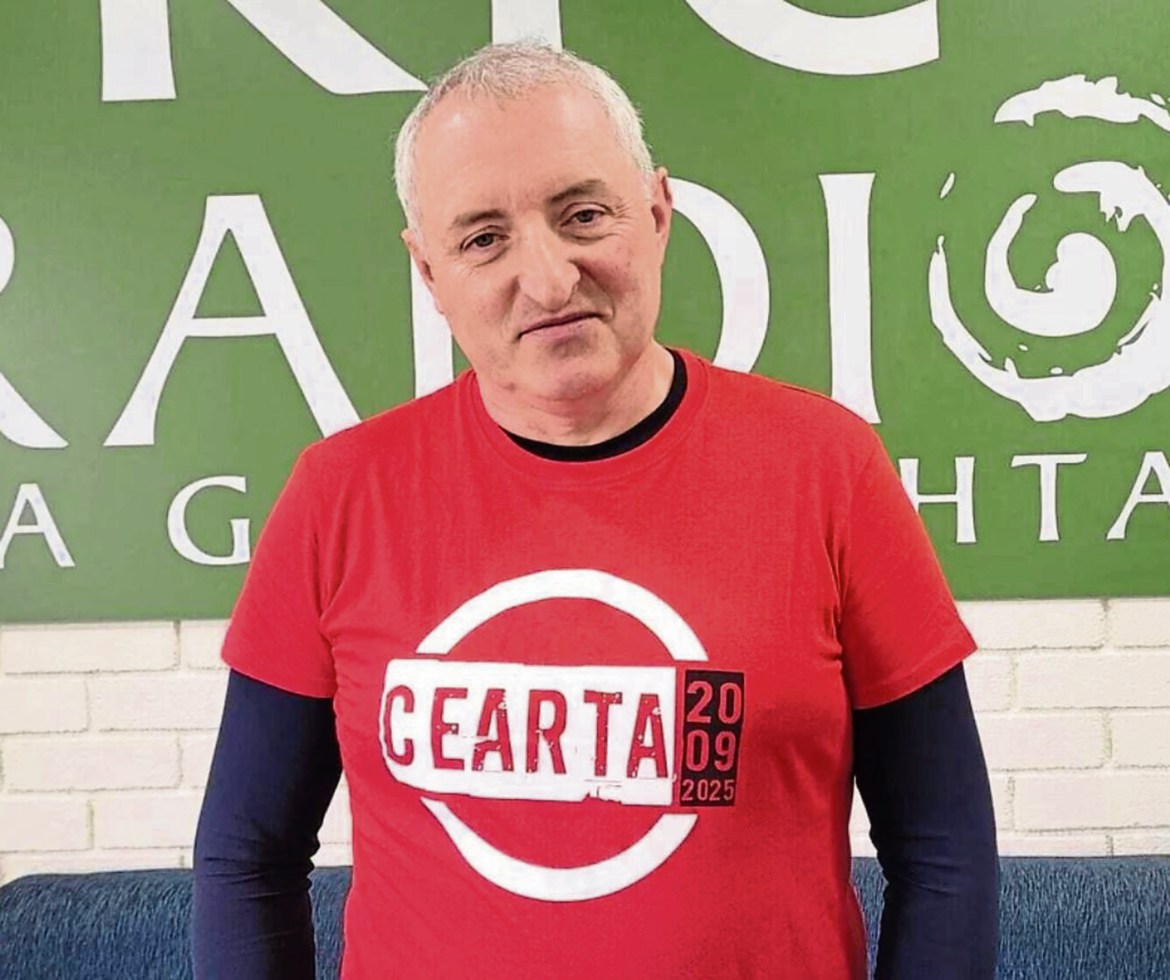


IRISH language advocates are lobbying for the reintroduction of Scéim Labhairt na Gaeilge (Irish Language Speaking Scheme), which was scrapped almost 15 years ago.
The renewed calls follow analysis published this week by Tuismitheoirí na Gaeltachta, which found that the number of families raising their children through Irish in the Gaeltacht has continued to fall.
According to the 2016 census, 15.8 per cent of families were raising their children through Irish.
By 2022, this figure had dropped to 15.2 per cent.
Dónall Ó Cnáimhsí, Oifigeach Pleanála Teanga an Iarthuaiscirt, spoke to Donegal News about the research, which he said reflects the trend of the “ongoing demise” of the Gaeltacht.
In his role with the language planning office, he hopes that work being carried out is slowing that decline.
However, he said in-depth research that goes beyond census data is needed to support effective planning.
He referred to Scéim Labhairt na Gaeilge, which was first introduced in 1933 and offered a financial incentive to Gaeltacht families raising their children through Irish.
For more than 50 years, families received a £10 payment per child for speaking Irish. By 2011, this had increased to €260.
Children’s proficiency was assessed by an inspector known as ‘cigire na bpuntaí’.
The scheme was also linked to home improvement grants and third-level scholarships, and families who did not qualify for the ‘puntaí’ were not entitled to those supports.
Dónall said that when he was growing up, many families were returning to the Gaeltacht from Scotland and England, and the scheme acted as an incentive to improve their Irish.
“And they did, within a year those kids were speaking fluently,” he said.
As well as serving as an incentive, the scheme provided a more accurate insight into the number of families raising their children through Irish than the census.
Dónall said it was a “tool to measure the health of the Gaeltacht” and that since the scheme was suspended in 2011, nothing has replaced it to assess the strength of Irish in specific
areas.
By contrast, he said the five-year census is a “blunt instrument” and that the data compiled should be “taken with a pinch of salt”, as it only reflects how families respond to set questions and doesn’t take many factors into account.
Irish language offices have been lobbying for the reintroduction of a similar family support scheme, to serve both as an incentive and as a way of measuring the levels of Irish being spoken.
“It is important that research like this is published and we are very thankful to Tuismitheoirí na Gaeltachta, but more research is needed to support us in the work we are doing.
“For language planning we are meant to base our plans on
current research and from there decide where we stand and where we want to be in five or ten years’ time.
“That’s where the research is vitally important.”
He said he hopes the Department responsible for the Gaeltacht will take note of the findings and reconsider its decision not to reintroduce a family support scheme.