


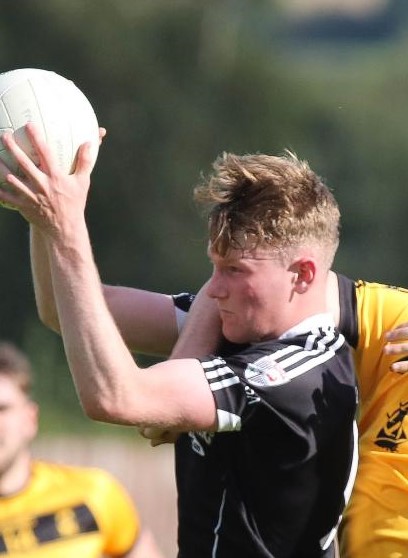


The difficulties faced by small rural clubs have come under the spotlight with the release of a new detailed report from the National Demographic Committee.
It made for interesting reading.
One in three people in the country live in Dublin or within an hour of the capital in satellite towns, but only 18 per cent of the country’s clubs are in this area.
Another interesting stat is that 25.5 per cent of all 0-5 year-olds in Ireland are concentrated across just fifty clubs.
Urban clubs are struggling with overcrowding and might have to turn away young players as they don’t just have the facilities.
It’s the other side of the scale for clubs like my own Na Rossa.
We are doing everything we can to try and stay alive but the numbers are reducing all the time.
In 2026, we will celebrate our 50th anniversary and it’s a super achievement that we have managed to keep it going this long to be perfectly honest.
We have enjoyed some great times but it’s getting harder and harder to keep things going.
At one stage, we were fit to field two adult teams but those days are long gone.
Now it’s a real challenge to get 15 adult players on the field and a good few of them tend to be on the wrong side of forty.
Underage is a real struggle. We generally can field to Under 12 when boys and girls can play together but it’s difficult after that.
When we can’t field at different age levels, the players go to Dungloe or Naomh Conaill and we are pleased that they get the opportunity to play football.
But it definitely makes things more difficult.
Families are not coming to the area and young people are heading away for college and it’s hard to get them to come back especially when employment opportunities are few and far between.
After Covid, you were thinking that maybe there would be more remote working but we aren’t seeing it to any great level with Na Rossa.
We aren’t the only club who are struggling and the reality is that it will be a big battle for the likes of ourselves and others not to go into extinction.
There’s talk of playing games at 13-a-side or 11-a-side and that might be a pathway forward.
Finding solutions is not easy because people leaving rural areas is an issue all over the country, not just in Ireland.
Maybe there could be some level of special dispensation for rural clubs where people who have transferred away to Dublin or London or wherever could come back and play a select amount of games for their home team over the course of the season as well as lining out for their adopted side.
If it was monitored correctly, perhaps that could help.
Another option could be the loosening of boundaries.
There are players in some of our neighbouring clubs that are not playing any football that could come and help us out.
There’s probably a fear that if you allowed it that the floodgates would open.
But realistically someone with ambition isn’t going to be trading a senior championship team for a side in the junior ranks.
Sometimes lads benefit from a change of scenery and a different approach.
Society has changed. When I was young, playing for the local club was massive and you didn’t want to miss out on that.
But then you weren’t looking at Instagram and getting daily updates into what is going on in Australia or whereever.
When one goes and settles, it tends to have a knock-on impact as well.
These are challenges that all clubs have but it particularly hurts ones with small numbers.
I don’t know how things will play out in the coming years but it will take a mammoth effort to stop the shutters coming down on clubs like Na Rossa.
Munster Club
Dingle are the Munster Club champions after they defeated St Finnbarr’s by a point in Thurles on Sunday.
It was a great game of football with some brilliant scores.
But unfortunately that wasn’t the major talking point from the match.
The Barrs were one ahead with time nearly up when they gave away a free in the middle of the field and were adjudged not to have handed the ball back straight away.
The referee brought play forward and Conor Geaney swung over a super two-point free to win the match for Dingle.
It was an incredible score and it was a real hero or zero moment because if he had missed, their season was over.
However, the manner in which the ball was brought up just doesn’t sit right.
The official didn’t mark out fifty metres and the free probably should have been inside the arc.
Now Dingle would have still have had the option to go for a two-pointer but given the circumstances, they surely would have gone for one to take the game to extra-time.
I think the FRC need to have a look at it because matches can’t be decided by a referee bringing the play forward fifty metres and yet nobody knows for sure if it has gone the full amount or not.
To me it looked a harsh call to bring the ball forward in the first place.
It’s the chaotic last few seconds and St Finnbarr’s had the ball and quite possibly could have had a free.
Before the wing-back has any time to think, he picks up the ball and suddenly a Dingle player is coming flying at him.
I don’t think you could say it was an obvious delay, and if it hadn’t been brought forward, I don’t think it would have been discussed post-match.
In fairness to Jimmy Barry Murphy he was very magnanimous after the match which is the measure of the man but it’s bound to be a sore one for the Barrs.
The Ulster Club Final takes place on Saturday with Scotstown set to meet Kilcoo.
I saw both up close with Erne Gaels over the last year or so and they are two quality outfits.
Kilcoo lost last year’s final and they will be hurting for that but their group has tasted provincial glory before.
Scotstown haven’t. They have come close and lost the 2018 Ulster Final to Gaoth Dobhair.
This is a big year for Scotstown. Yes they have talent coming through but the Hughes brothers and Jack McCarron are heading towards the latter end of their careers now.
Kilcoo proved much too strong for Scotstown last year in the semi-final.
But I think the Monaghan champions will have learned from that and I fancy them to get the Ulster medals they crave.
Open Training Session
We held a great open training session with Fermanagh last Saturday morning.
We opened up the gates and allowed coaches to come and see a good chunk of the training.
I’m sure people that I was involved with during my time with Donegal would probably laugh at me about it.
That’s not something that would have been considered during my stint with Donegal.
And in general in the GAA, we are all very reluctant to show what we are working on.
That’s in big contrast with rugby in particular which is very open to outside coaches coming in and see how a set-up is organised both in terms of pitch work and in the gym.
I’ve really enjoyed my first few weeks with Fermanagh and there’s a real good energy about the place at the moment.
We’re getting to know the players and we felt this was a good idea to try and build up relationships with the clubs.
We had around 75 coaches that registered which showed a good interest.
There was nothing revolutionary done over the course of the open session but I think it was a worthwhile exercise for coaches.
Most coaches will have a good idea of how to set up a training session but they might have picked up something different or seen it operated in a different manner.
Perhaps they might have taken something from the communication between players and coaches, or maybe what we did to try and make sure our intensity levels stayed high.
We were out on the pitch for around 45 minutes and then the group went into some game-based scenarios.
We now go to Tempo on Saturday and take on Tyrone in a challenge match.
Donations at the gate go to the Friends of the Cancer Centre charity and I’m looking forward to a good game. Tyrone are preparing for the McKenna Cup and Division 2 so they will provide a good challenge for our boys.
There are plenty of matches going on at the moment throughout the country and there are only a couple of weeks to wait now until the start of the McKenna Cup.