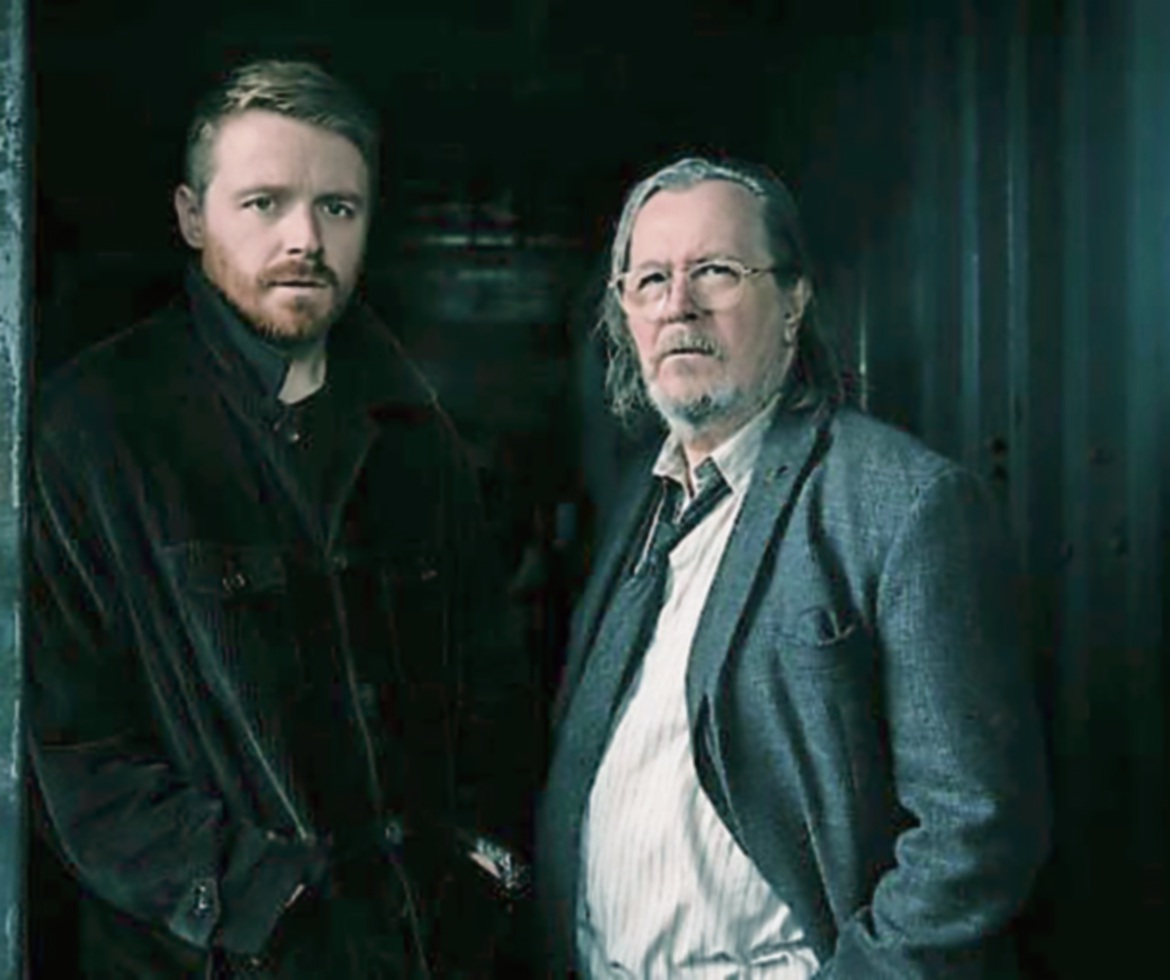
- Slow Horses – Apple TV
- Finding Britain’s Slave Traders – BBC2, Monday, 9pm
- Wilderness with Simon Reeve – BBC2, Sunday, 9pm
- Clickbait Clinic – BBC1, Monday, 8.30pm
- Killer Story – HBO
- By Paul Bradley
- Six seasons in, Slow Horses has returned for a new run, with Gaby Chiappe replacing Will Smith as lead writer. Almost immediately you wonder if that’s the reason the plot seems more straightforward than before, or if it’s nudging the show’s sarkiness into the background.
- Or are you just fearful that an old favourite is going to go on too long?
- But it wastes no time in kicking off. If you remember the first season, you might remember Struan Loy (Paul Higgins) being kicked out of Slough House by Gary Oldman’s malodorous Jackson Lamb; well, he reappears here, only to be given an even more unpleasant send-off in a shipping container. It looks like an accident, but it raises Lamb’s suspicions, and it soon seems that someone is systematically hunting down former agents.
- Meanwhile, River Cartwright (Jack Lowden) is grieving the loss of his grandfather, and Diana Taverner (Kristin Scott Thomas), now MI5 First Desk, appears to be covering something up (and may even have dismissed Lamb and his colleagues without telling them).
- The plotting here (basically a slow chase) is less involved as in the show’s early years, which draws more attention to less likely elements: the Slough crowd are famously not up to spec, but they continue to pull off projects the rest of MI5 cannot, while conversely, the trained assassins sometimes seem too amateurish to feel like a threat.
- And while the teal-and-orange colour scheme is certainly striking, is it just too much like a 2026 AI graphic?
- Still, season five was the weakest season to date, so this actually feels as if it’s regained some mojo. What keeps it afloat is the cast. Gary Oldman remains fabulously repellent as Lamb, and his scenes with Taverner still crackle with resentment, while some returning secondary characters (like Hugo Weaving) bring some texture and mystery.
- The dialogue still mixes dark humour and bite, and while you still worry that it will eventually overstretch itself, so far it’s still more solidly entertaining than just about anything else on the box.
- Finding Britain’s Slave Traders
- In Finding Britain’s Slave Traders, David Olusoga returns to familiar territory, but with good reason: it’s a follow-up to his award-winning 2015 series Britain’s Forgotten Slave Owners (which showed how widespread slave ownership once was among ordinary Britons), and it centres on the newly compiled Register of British Slave-Traders, which catalogues everyone known to have invested in the trafficking of enslaved Africans.
- The broad story is still familiar, even if you only caught the furore around the toppling of Edward Colston’s statue in Bristol (which is revisited here): the trade’s shift from Iberian to English hands under the Tudors, its expansion into the Caribbean sugar economy, the fortunes it built.
- The first episode revealed just how high it went, and how unremarkable it seemed to those partaking: businessmen, governors of banks, royalty, Kings and Queens all invested as they would in any other commodity (Elizabeth I was the first monarch to really profit from it).
- There were of course some early objectors, but Olusoga himself seems faintly puzzled by, for example, the investment of a mixed-race woman in the raiding and selling of indigenous people in Africa.
- It’s good, complicated information, though as a film this is a little static and dry: talking heads, some old documents, a river island in West Africa.
- Still, academic as it might be, the story is a big and terrible one, so it always has some weight.
- Wilderness with Simon Reeve
- Simon Reeve is back on Sunday nights with a second series of Wilderness: four gruelling treks into some of the most remote places left on earth, with a welcome focus on the conservation efforts of local communities.
- Episode one, in which he went deep into the rainforests of Papua New Guinea in search of one of the world’s rarest mammals (the tenkile tree kangaroo), was one of the more physically revealing films I’ve seen for a while: a long journey in overview, but up close full of slips, falls, rain, sweat and exhaustion, to the point where Reeve himself claims he sounds like he’s whinging all the way through it. (And while he’s on the verge of collapse, the locals lead him cheerily through the worst of it all in bare feet.)
- But the rainforests, despite covering just a tiny fraction of earth, hold more than half of its plant and animal species. Many of them are still unknown to science, and some of the crawlies here, trying to clamber into the crew’s tents, will have viewers squirming on their sofas.
- And inevitably, even in the most remote spots, Reeve comes across massive destruction as trees are felled for industry and roads.
- It’s as depressing as everything
- anything else these days, though it is cheering to see how much respect and care the locals have for their animals.
- It’s enjoyable viewing for the nature, and for a voyage we will never make ourselves; and it might even be important viewing because, in a few years, some of these forests and animals will be as deceased as hope.
- Clickbait Clinic
- BBC has been quietly making shows that help us be a little more skeptical about online claims and trends, though Clickbait Clinic has had a bit more attention than most, perhaps because it comes from Stacey Dooley (with help from experts Dr Alex George and Dr Nighat Arif).
- The gist is important too: looking at what’s true and what’s nonsense in the health trends taking over social media feeds (dangerously, 1 in 3 of us now turn to social media for health advice).
- But it’s not a simple matter of poopooing every trend. Episode one, for example, was clear that drinking laundry powder (yes, it’s a thing now) is very dangerous, but was more sympathetic when looking at the people having their legs broken and augmented to gain some extra height, suggesting this was just another kind of body dysphoria.
- It’s a magazine-style show, but that lightness can make it more accessible than a heavy scientific one; and really, anything that helps us learn the benefit of doubt is worthwhile.
- Killer Story
- Finally, if you’re looking for a slightly different true-crime documentary, HBO’s Killer Story is just that.
- Yes, there’s a mysterious double murder in it, and a trial that appears to have been terribly botched; but the focus is on the vast efforts of two armchair investigators, Eileen and Keen Umbehr, who fixated on the case so much that they sold their land to help the convicted woman they believed was innocent.
- The story is told mainly by former NYT journalist Joe Sexton, who initially wrote them off (when they began to email him with theories) as woolly do-gooders…until, eventually, their 2,714th email began to change his mind.
- From there the story is sometimes funny and sometimes passionate, swerving between the Umbehrs’ essential decency and Sexton’s pleasantly salty cynicism.
- And there are real surprises too: here I am at the end of part two (out of just three), and an unexpected testimony means it’s really not clear where the story is going. Definitely worth a look, and neither lurid nor gratuitous.
- Paul Bradley’s Channel Hopper column appears every Thursday in the Donegal News.
Slow Horses – back for another season on Apple TV.

Wilderness with Simon Reeve – enjoyable viewing on BBC2.