


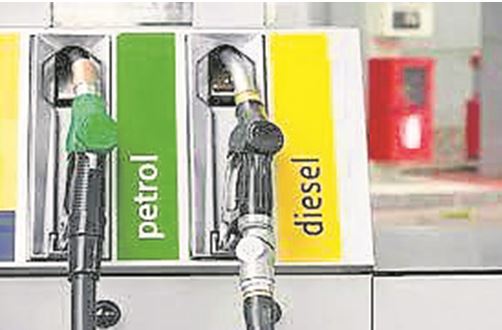


Fuel prices have been yo-yoing on forecourts since the recent rises triggered by the war in Iran, and for motorists there has been little sense of stability in any of it.
Over the past three-and-a-bit weeks, prices have moved so quickly that, in some cases, they were changing within hours on the same day. Even stations that would normally be expected to offer lower prices were not always doing so.
There has been no sense of being able to plan, only constant checking of roadside signs and a growing awareness that the next fill will likely cost more than the last.
That’s the backdrop to the Government’s announcement on Tuesday to cut excise duty on fuel from midnight on Wednesday. The measures mean a 15 cent per litre reduction on petrol and a 20 cent reduction on diesel, along with a temporary pause in the NORA levy.
But what is announced in Dublin does not necessarily translate into immediate relief at the pumps. Vincent Jennings, chief executive of the Convenience Stores and Newsagents Association, made that point clearly when he said filling stations can’t be expected to sell fuel for less than they paid for it.
Depending on how busy a station is, he said it could take between two and ten days for previously bought stock to be sold through and replaced with lower-priced fuel.
Even when those reductions do come through, the figures remain stark. In Letterkenny this week, there were stations charging €2.25 per litre for diesel. Even with a 20 cent reduction, that still leaves diesel at €2.05 per litre. Paying anything over €2 a litre is going to be unsustainable for many people, particularly if they are making regular journeys every day and have little or no alternative.
That’s why the Government measures, while welcome, do not feel like enough on their own.
Across Donegal, it’s not unusual for people to make long journeys at least twice a day. Now though, families are hesitating over trips and workers are calculating whether another week of commuting like this is manageable.
Parents are weighing school runs, shopping, after-school activities and hospital appointments against fuel costs that have become too volatile to ignore. In rural counties like Donegal, the car is not a luxury and often not even a choice. It’s how people get to work, bring children to school, make hospital appointments, reach shops and hold together family life across long distances.
Public transport exists, but not always in the way people actually need it to. It’s not an exaggeration to say many journeys in rural Ireland have no realistic alternative to driving.
Of course people will adapt, because people always do. They will combine trips more carefully, think twice before unnecessary journeys and cut back elsewhere to protect the commute that can’t be avoided.
But there has to be a limit to how much adaptation can be squeezed from households before the conversation has to widen. There are towns that could do with fewer cars and less traffic and few would argue against reducing congestion where it can be done fairly.
But it can’t simply mean making driving so expensive that people are forced off the road without viable alternatives.
That’s not transport policy. It’s pressure falling hardest on those with the fewest options.
Where the cost of getting to work remains high, employers should look honestly at what can be done at their end. That doesn’t mean every job can be done from home. Retail, healthcare, construction, manufacturing, hospitality and transport all require people to be physically present. But there are still many roles where remote or hybrid working is practical and feasible.
Labour TD for Louth, Ged Nash was right to say the government response should be about policy as well as financial measures for commuters and businesses.
If workers are being penalised daily by the cost of getting into the car, then enabling more working from home where possible should be part of the discussion.
This should not be treated as an indulgence or a side issue.
For many workers, especially outside the main cities, it’s part of the cost-of-living reality. Fewer commutes mean less money spent on fuel, less time lost on the road and less pressure on households.
People will make changes when there’s little alternative.
The question is whether government and employers are prepared to make changes, too.