


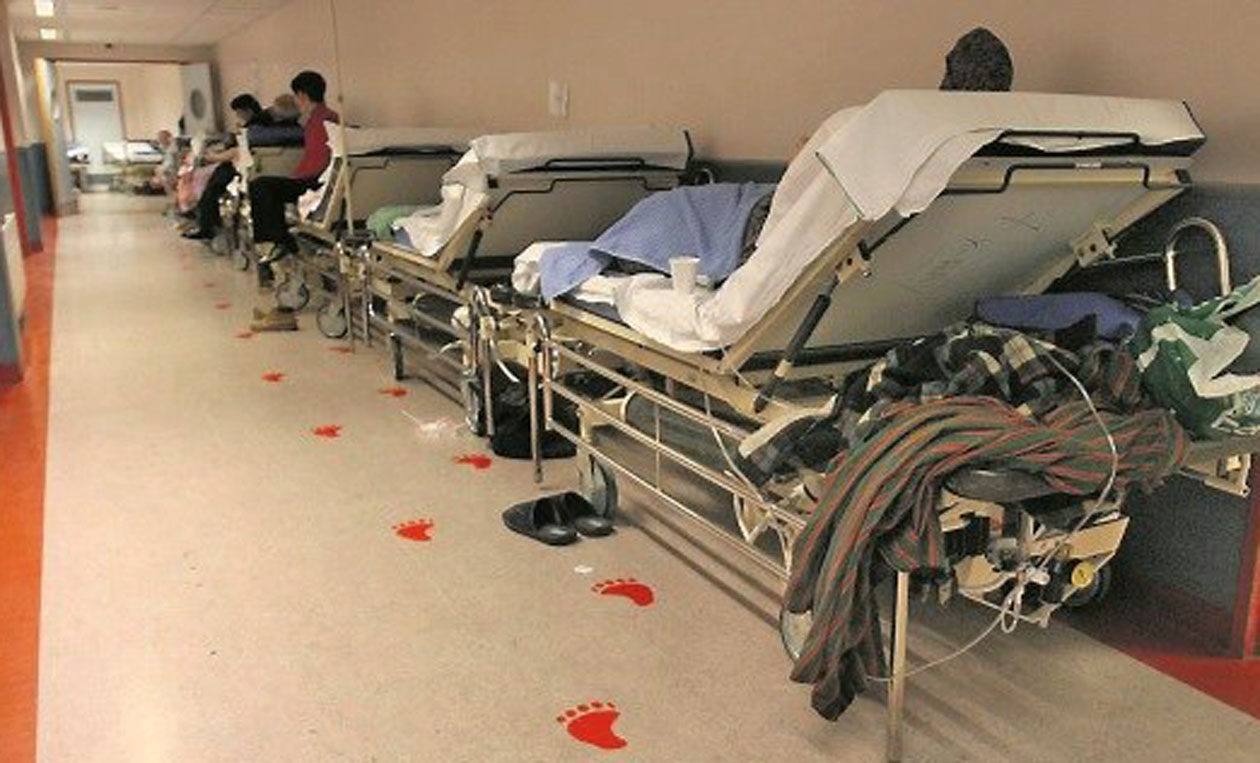


There were 50 patients without a bed at Letterkenny University Hospital (LUH) yesterday morning, according to the latest Trolley Watch figures from the Irish Nurses and Midwives Organisation (INMO).
The figures show that 16 patients were waiting on trolleys in the emergency department, while a further 34 were waiting for beds in wards throughout the hospital.
The situation comes after a week of extreme pressure on LUH’s emergency department, which has seen a marked increase in patient presentations.
Last week alone, the hospital recorded 1,089 attendances at its ED, with over half of these being self-referrals. This surge in patient numbers has resulted in significant delays, with up to 12 ambulances at times waiting to offload patients due to a backlog in the emergency department.
In response to the growing pressure, the Health Service Executive (HSE) has urged the public to attend the hospital only in the event of an emergency to help alleviate the strain on services.
“The hospital is committed to treating everyone who presents at the Emergency Department; people who are seriously injured or ill are assessed and treated as a priority and those who do not require urgent care may be waiting longer,” a spokesperson for the HSE said.
The HSE also acknowledged the difficulties these delays cause for patients and their families, offering an apology for the inconvenience and distress.
Meanwhile, the Irish Nurses and Midwives Organisation (INMO) have raised concerns over the continued use of trolleys and inappropriate waiting spaces.
“We know when activity is this high across the system, patient and staff safety suffers,” said Phil Ní Sheaghdha, General Secretary of the INMO.
Ms Ní Sheaghdha pointed to staffing shortages as a major factor contributing to the issue, highlighting that unsafe staffing is undermining the ability to deliver safe and timely care.
“In many hospitals, unfilled rosters are becoming the norm rather than the exception, creating increasingly unsafe conditions for both nurses and patients,” Ms Ní Sheaghdha added.
In addition to the pressures on individual hospitals, a new study by Fórsa Trade Union has revealed a growing staff retention crisis within health services.
The national research, which included members in Donegal, found that three-quarters of workers are regularly considering leaving their roles and nearly 70 percent actively considering leaving.
The research paints a picture of a workforce struggling with low morale and working under extreme pressure across the country’s health services.
Fórsa has pointed to a legacy of underinvestment and recent policy decisions, such as the capping of staffing levels and the abolition of vacant posts, as key factors contributing to the crisis.
The union also highlighted the severe understaffing and escalating workload pressures, which are having a direct negative impact on the quality of services.
Head of Fórsa’s Health and Welfare division, Ashley Connolly, said low morale is eroding teamwork, retention and patient care as envisioned by the Government’s Sláintecare programme.
“The lived reality for our health and welfare members is long waiting lists, reduced access to community services and local networks closing or shrinking.
“Sláintecare was intended to deliver universal, community-based care, but staff do not believe the system is staffed or supported to achieve that. Their experience must be taken seriously by the Government and the Department of Health,” she said.